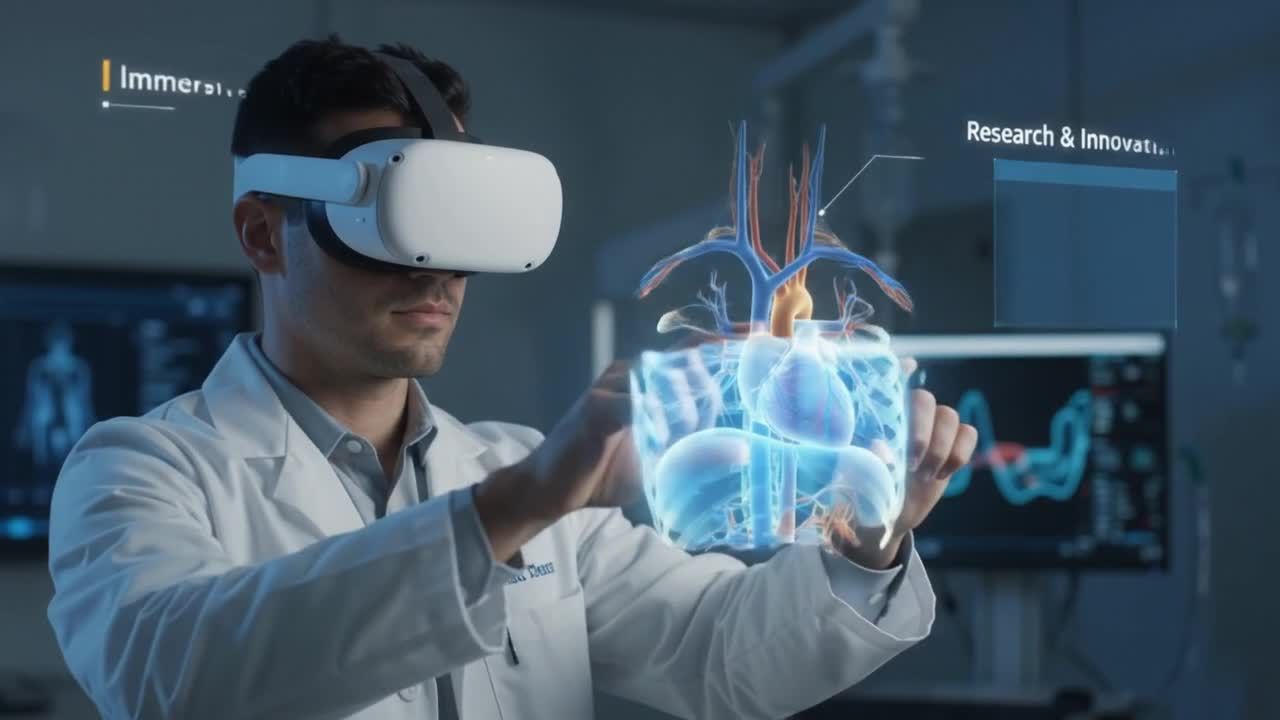
01
At a glance
Sub-project code
SP-03 (OPH-HEALTH), one of seven sub-projects on the Southern University Mobile CAVE
Truck domain
healthcare
Aligned program
Louisiana Office of Public Health (OPH) VR Project
What it offers
short, on-site 3D training sessions for hospitals, clinics, nursing and EMS schools, and public health teams, booked around shifts
Louisiana's need
about 73% of residents live in areas designated as having a health care provider shortage
Nursing outlook
Louisiana faces an estimated shortage of about 6,000 registered nurses by 2030
Grand opening of the Mobile CAVE
Southern University, Baton Rouge, date to be announced
02
What it is
SP-03 brings 3D clinical and public health training to the places where health care happens. The Mobile CAVE parks at a hospital, a rural clinic, a nursing school or a parish health unit. A care team steps into a 3D room and works through a case: a patient who is getting worse, a surge in the emergency department, an outbreak response, a difficult conversation. They make their decisions, see what happens, debrief with an instructor, and run it again.
The sub-project is aligned with the Louisiana Office of Public Health VR Project, a program listed by Southern University's immersive technology center. The Office of Public Health, part of the Louisiana Department of Health, works through nine regions and parish health units that provide immunizations, reproductive health care, infectious disease prevention and response, STI services and WIC. Those are the teams and services SP-03 is built to support.
The problem SP-03 addresses is well known to every health educator. Practicing on real patients carries risk, so learners need a safe place to start. Rare, high-stakes cases are hard to schedule during a clinical placement. Simulation labs and manikins are costly and sit in a few fixed locations. Staff on shifts cannot easily leave the floor for a day of training, and rural and small facilities are farthest from the labs.
SP-03 changes each of those. The mistake happens in simulation, not at the bedside. Scenarios are dialed to the case a team most needs to rehearse. The simulation arrives at the hospital or school, so no one travels to a fixed lab. Short sessions are booked around shifts. The truck can be scheduled to reach smaller sites on a tour.
03
How it works
A hospital, clinic, school or health unit starts with a short conversation about what stops its people from practicing more, and which case they most need to rehearse. The session is built or licensed around that case.
The Mobile CAVE comes to the site. Staff walk out for a short session and walk back to their unit, so coverage is not disrupted.
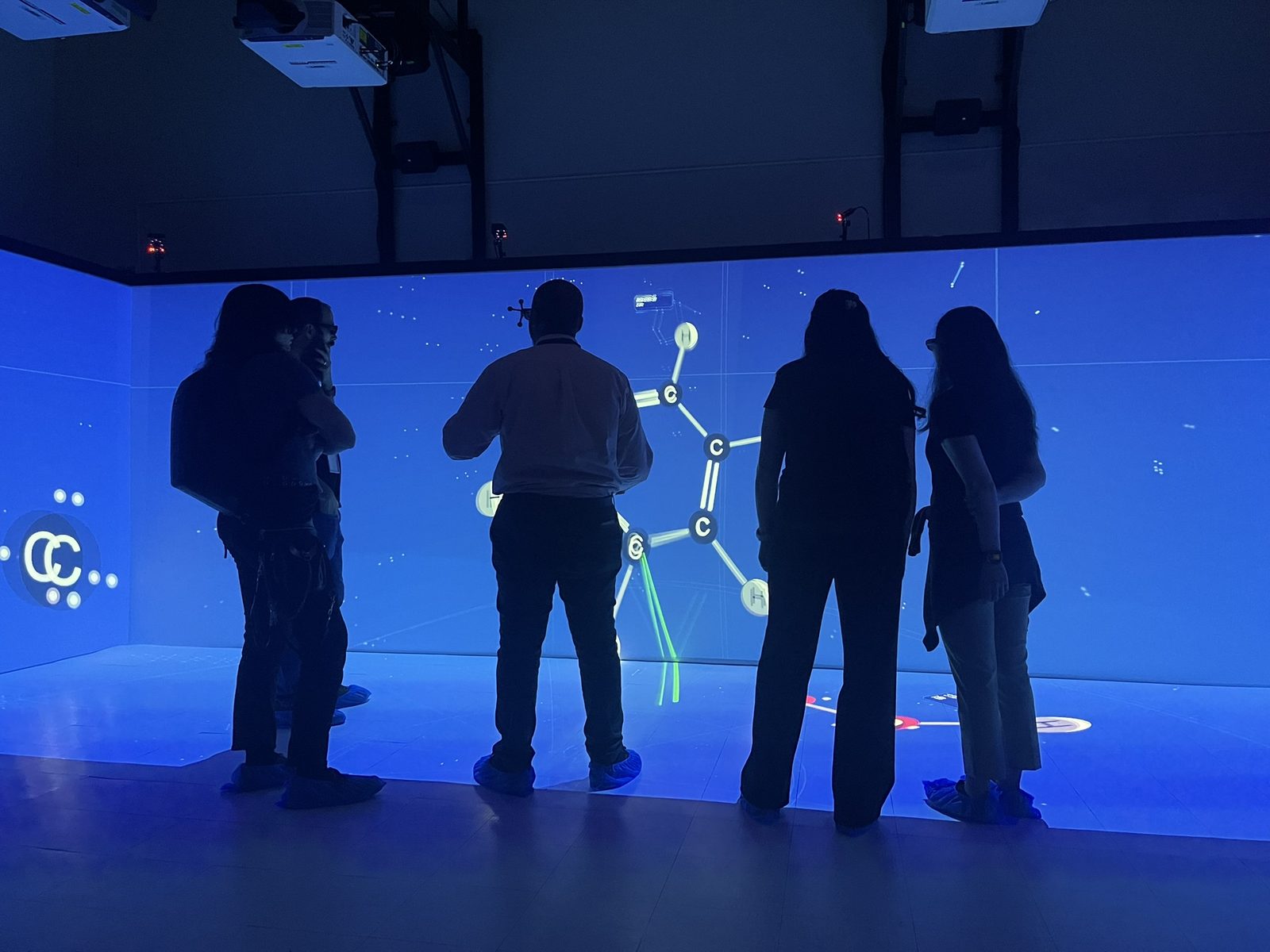
Each participant keeps their shoes on, puts shoe covers over them, and puts on 3D glasses. The scene surrounds the team on the walls and floor, a room, a patient, a 3D organ, a community map, and everyone sees the same thing at once.
The team examines, decides and acts. The monitor alarms, the patient responds, the outbreak spreads or slows. An instructor replays the moment and asks why. The mistake becomes the lesson.
The team runs the case again, harder or different. Time spent practicing in the simulation is recorded separately from skills an instructor has checked hands-on, so a hospital or funder can see the difference between practice and proof.
04
Impact
Training reaches the places with the fewest providers
Louisiana state health figures show about 73% of residents live in areas officially designated as having a health care provider shortage. Fifty of the state's 64 parishes are at least 92% rural, home to about 1.2 million people, most of them minorities, elderly or living in poverty. Clinics and health units in those parishes have the least access to simulation centers. A training room that comes to them helps keep skills sharp where they matter most.
Building the nursing workforce Louisiana needs
The Louisiana Board of Regents reported an estimated shortage of about 6,000 registered nurses by 2030, more than 40% of projected demand. Every nursing and allied-health student who can practice more before clinical placements arrive at those placements better prepared, and every working nurse who can rehearse a rare case without leaving the floor stays ready.
A public health workforce ready for the next emergency
Parish health units lead immunization campaigns, infectious disease response and outbreak investigations. Those events are rare until they are not. Rehearsing them in 3D, as a team, before they happen means a faster and steadier response when they do.
Opening health careers to young people
When the truck visits a school, students who step into a 3D health scene see a career in nursing, public health or medicine as something they can reach. Southern University already invites local high school students interested in nursing to tour its clinical simulation labs.
The evidence on VR in health education is strongest for knowledge. A 2020 meta-analysis of 12 studies and 821 participants in the Journal of Medical Internet Research found that VR improved knowledge in nursing education significantly compared with other methods (standardized mean difference 0.58). The same analysis found no significant difference for skills, satisfaction, confidence or performance time. That result shapes how SP-03 is designed: 3D sessions build understanding and decision-making, and hands-on skills are checked separately by an instructor. The reporting rules keep the two apart on purpose.
Public health agencies are testing VR for emergency response. In a study published in BMJ Open, CDC emergency responders who completed a VR response scenario overwhelmingly agreed others would benefit (97%), and most said it represented real response scenarios (72%) and that they would use lessons learned in the field (71%). The authors judged VR "an acceptable training tool with data indicating high usability and excitement" and suggested it could complement traditional training such as a pre-deployment briefing.
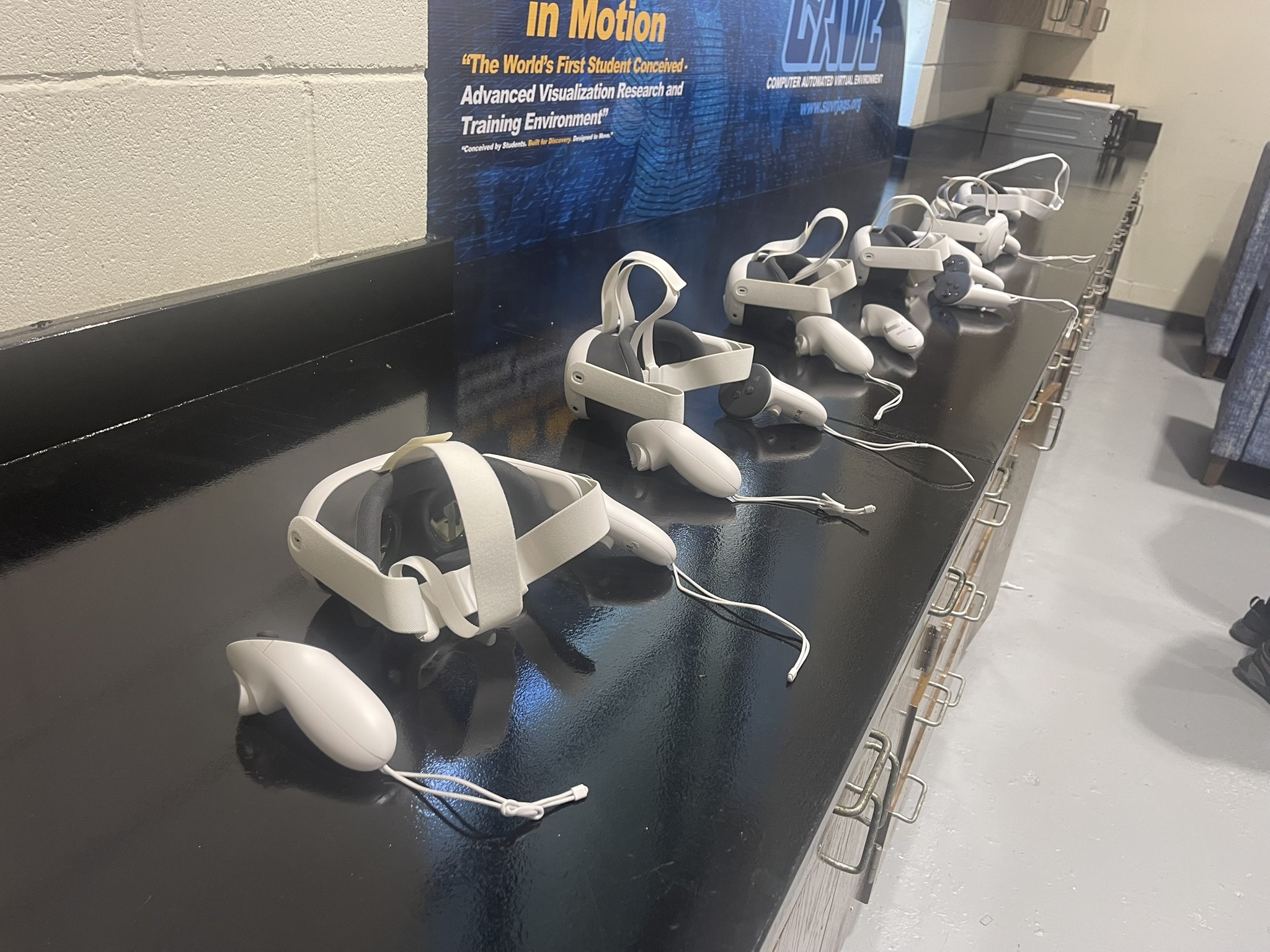
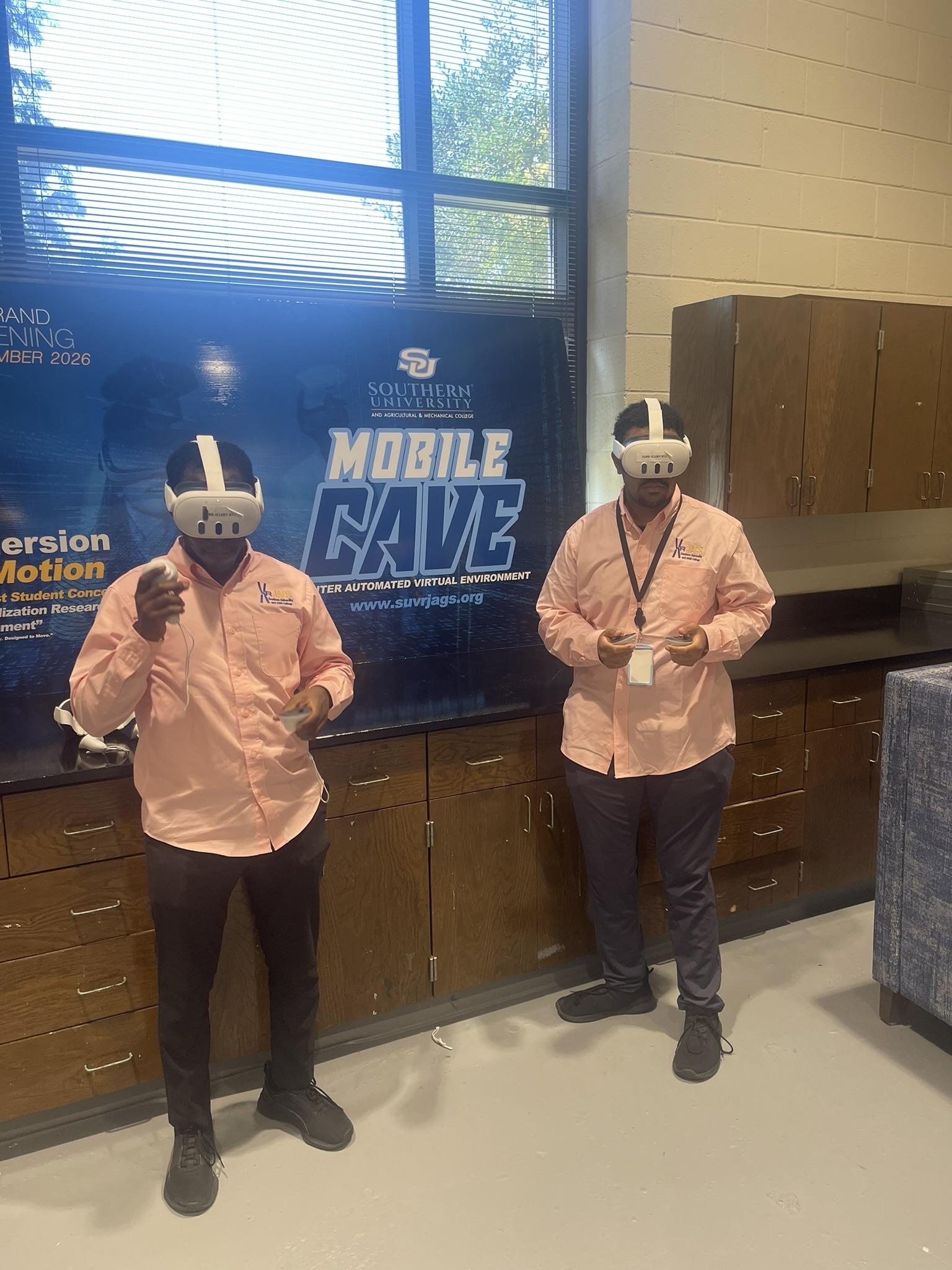
A CAVE adds a team dimension. Health care is delivered by teams, and a crisis tests the hand-offs between them. In a CAVE, the whole team stands in the same scene and talks face to face, rather than each person isolated in a headset. For individual practice between visits, the same scenes can run on headsets built and tested in Southern University's XR Development Studio.
Over time, SP-03 builds a library of Louisiana-specific scenarios: the cases rural clinics see, the outbreaks parish health units plan for, the surge a coastal hospital faces in hurricane season. Each scenario built once can be reused across many sites.
05
Why Southern University
Southern University already lists the program SP-03 is aligned with: the Louisiana Office of Public Health VR Project, among the programs of its immersive technology center. The university brings VR development, headsets and CAVE rooms together in one place, with a fleet of VR headsets, a development studio and fixed CAVEs on campus.
Southern has deep roots in health education. Its College of Nursing and Allied Health is the only college in Louisiana offering a PhD in nursing, and its School of Nursing runs clinical simulation labs and has hosted Simulation Days that bring local high school students to campus to learn about human simulation technology.
The Mobile CAVE was conceived and led by Southern University students from concept to completion, and the university's XR Development Studio builds VR applications with Unity and OpenXR. The same team that builds the scenes can work with nursing faculty and public health partners to keep them accurate.
As a land-grant HBCU, Southern's mission is to serve the people of Louisiana, including the rural and minority communities that face the deepest provider shortages. SP-03 is that mission applied to health.
06
Who it serves
Hospitals and health systems
Staff rehearse the rare, high-stakes case close to the floor, in short sessions built around shifts.
Rural clinics and small facilities
Teams far from fixed simulation labs get the same training when the truck is scheduled to their site on a tour.
Nursing, EMS and allied-health schools
Students practice before clinical placements start, when mistakes cost nothing.
Parish health units and public health teams
Staff rehearse immunization campaigns, infectious disease response and outbreak scenarios as a team.
Emergency and incident command teams
Hospital incident command practices surge and evacuation alongside SP-02, crisis management and emergency preparedness.
Students exploring health careers
School visits show young people what nursing and public health work looks like from the inside.
07
Why fund it now
The need is large and documented. About 73% of Louisiana residents live in provider-shortage areas, and the state faces an estimated 6,000-nurse shortage by 2030. Training that comes to the facility helps keep the workforce Louisiana has, and helps prepare the workforce it needs.
The platform is ready. The aligned program exists, the university has the studio, the headsets and the CAVE expertise, and the Mobile CAVE is getting ready to open. Funding now decides how many health sites the truck reaches in its first year and how many scenarios are built for them.
Funding makes training reach the hardest-to-reach sites. A single vehicle serves many facilities, so the cost of each scenario spreads across every hospital, clinic and school it visits, instead of sitting in one fixed lab.
Funding produces honest results. Each session starts with a named case and ends with a debrief. Simulation practice time is reported separately from instructor-checked skills, and only totals are shown publicly. A funder sees exactly what was practiced and what was proven.
Funding builds a lasting resource. Each scenario becomes part of a Louisiana library that serves nursing schools, hospitals and public health teams for years.
08
How it connects
SP-03 works hand in hand with Crisis management and emergency preparedness (SP-02), since hospitals and public health teams are at the center of every disaster response. It reaches young people through K-12 education and mobile STEAM outreach (SP-01), where a health scene can open a career path. Scenarios are built in the XR Development Studio and can be tried on campus in the Stationary CAVE. Student-led Mobile CAVE systems integration (SP-07) keeps the truck running and calibrated for each stop. The Vision module shows how all seven sub-projects share one truck.
09
Questions funders ask
No. It brings practice to sites that are far from labs and helps learners prepare before placements. Hands-on skills are still checked by an instructor and recorded separately.
A 2020 meta-analysis found VR significantly improves knowledge in nursing education, with no advantage over other methods for hands-on skills. SP-03 is designed around that: 3D sessions for understanding and decisions, instructor checks for skills.
Sessions are short and booked around shifts, so staff do not leave the floor for a day.
The scenario for each site is built or licensed with the partner before the demo, around the case the team most needs to rehearse.
Yes. The truck can be scheduled to reach smaller sites on a tour, and the same truck serves clinics and hospitals across a parish.
Practice time in the simulation is recorded separately from skills an instructor has checked hands-on. Only totals are shown publicly.
10
Sources
- Louisiana's rural health care anemic for minorities, poor, elderly, Louisiana Illuminator, November 18, 2022
- Louisiana's Colleges & Universities Seek to Address Significant Nursing Shortages Through Talent Development, Louisiana Board of Regents, April 27, 2022
- Regional Offices & Health Units, Louisiana Department of Health
- Chen et al. (2020), Effectiveness of Virtual Reality in Nursing Education: Meta-Analysis, Journal of Medical Internet Research 22(9):e18290
- Bugli et al., Training the public health emergency response workforce: a mixed-methods approach to evaluating the virtual reality modality, BMJ Open
- Southern University and Agricultural & Mechanical College, 64 Parishes
- Southern University nursing school to host annual Simulation Day, WBRZ
- XR Development Studio, AM Lab
- Immersion in Motion (barriers in healthcare training)
- Sub-projects, Immersion in Motion