01
At a glance
Sub-project code
SP-07 · CAVE-OPS, one of seven sub-projects on the Southern University Mobile CAVE
Truck domain
Vehicle and tour operations
Focus
vehicle engineering, multi-wall projection calibration and statewide tour deployment
Role
the other six sub-projects each carry a training program; SP-07 runs the truck itself
Who leads it
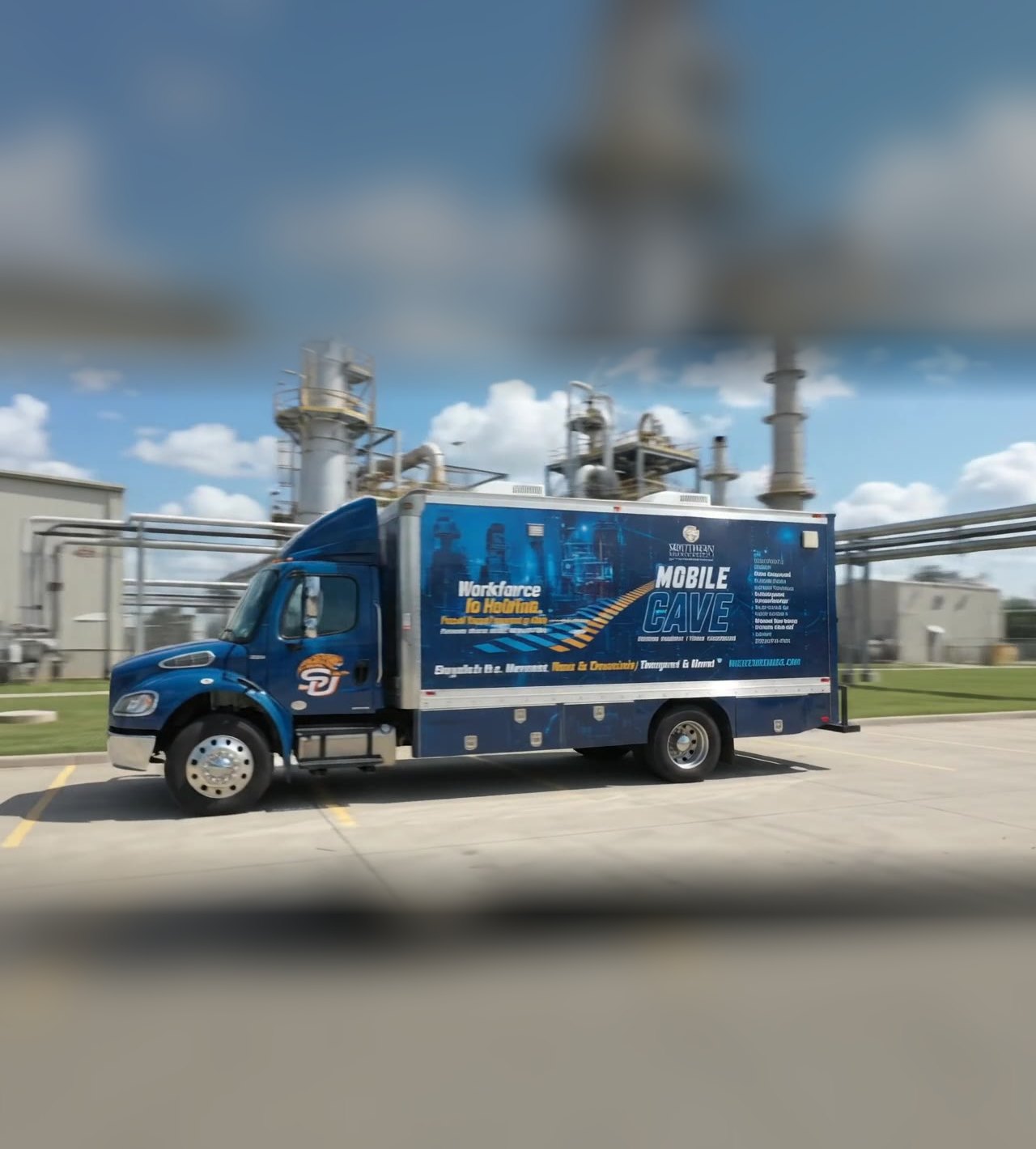
students. Southern University describes the Mobile CAVE as conceived and led by students, from concept to completion, and outfitted by industry experts
Grand opening
Southern University in Baton Rouge, date to be announced
Project Director
Deidre Hardy Street, Southern University Office of Research and Strategic Initiatives
Who it reports to
sponsors and the build team, through sponsor reports and a short results note after each stop
02
What it is
Every other sub-project on the Mobile CAVE teaches something: science lessons, crisis response, healthcare, research, manufacturing, drones. SP-07 is what delivers all of them. It is the student-led team that integrates the systems inside the truck, keeps the 3D projection accurate and takes the unit on the road across Louisiana.
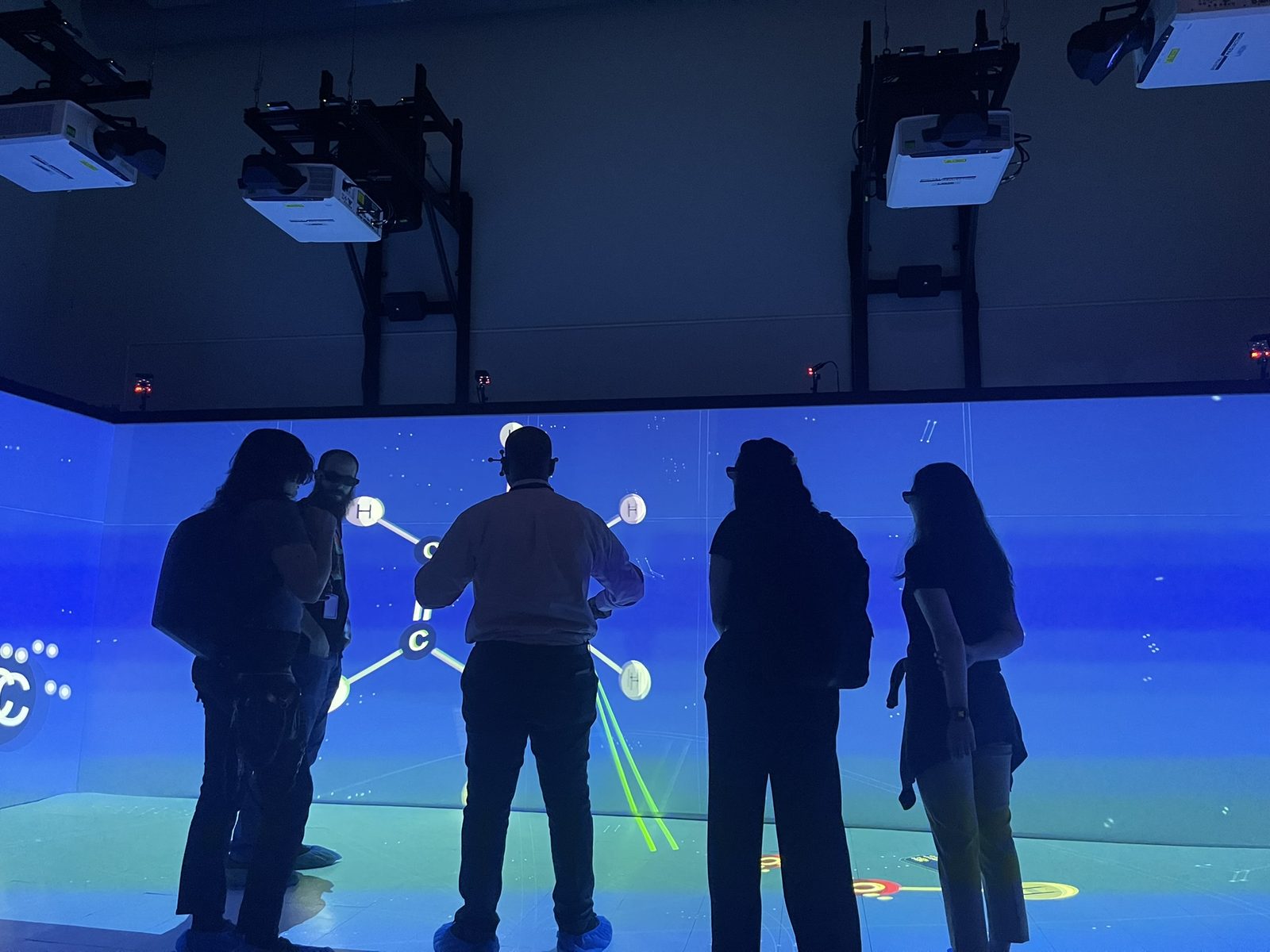
A CAVE, short for Cave Automatic Virtual Environment, is a room where projectors show matching 3D images on the surrounding walls and floor. Visitors wear 3D glasses, and a tracking system follows where they stand so the image matches their point of view. The first CAVE was built in 1992 at the Electronic Visualization Laboratory of the University of Illinois Chicago by Carolina Cruz-Neira, Daniel Sandin and Thomas DeFanti. Most CAVEs since then have stayed put inside a building, including Southern University's own stationary CAVE in Room 157, a four-wall Fakespace system with images projected on the floor too.
The Mobile CAVE puts that room inside a vehicle. That changes the engineering. A building does not move, shake or change temperature between stops; a truck does. Power, cooling, mounting, projector alignment and setup time all have to work at every stop, not just once.
SP-07 is where students learn to solve those problems. It turns the truck into a working engineering project, and it turns the students into the people who can run it.
03
How it works
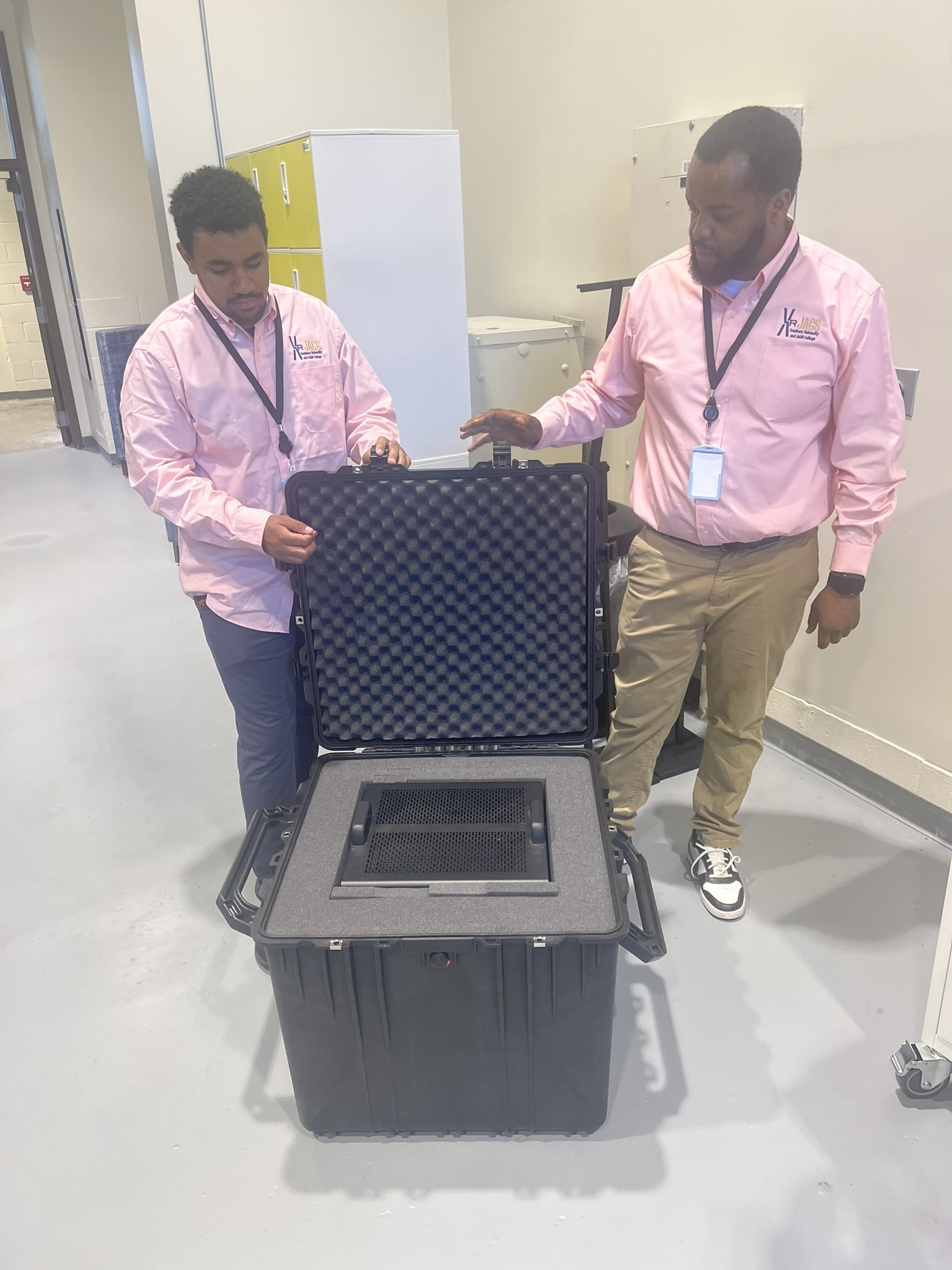
The truck carries the CAVE, its computers, projectors, tracking system and power. Vehicle engineering covers how all of that is mounted, powered, cooled and protected so it arrives working.
Projectors, image computers, tracking cameras, 3D glasses and the VR content from the XR Development Studio have to run as one system. Students connect them, test them and keep a record of what works.
A CAVE only works when the images on every surface line up and the tracking matches where people stand. Displays and sensors have to be calibrated so images are not distorted and tracking stays accurate. Multi-wall projection calibration is the step that makes the room feel like one continuous space instead of separate screens.
Each stop needs a plan: where the truck parks, power, the group size, the scenario the host asked for and the safety brief. Visitors keep their shoes on and put shoe covers over them before stepping onto the CAVE floor.
An on-site demo lasts about 20 minutes. The team runs the scenario for the host's sub-project, guides the group through it and answers questions.
After each stop, sponsors get a short note on who tried it, what they said and what is next. Those notes keep the tour accountable and show what each stop delivered.
04
Impact
Students build the thing they are learning from
SP-07 gives students real responsibility for a complex, public-facing system. They plan, integrate, troubleshoot and present. That is engineering practice, not a classroom exercise, and it is what employers look for.
Training reaches people who cannot travel to it
Many schools have no lab, many plants cannot spare a crew for a day, and many hospitals cannot pull staff off the floor. A mobile unit can be scheduled to reach smaller sites on a tour, so the training goes to the learner instead of the other way around.
An HBCU team leading a statewide resource
HBCUs make up about 3% of U.S. colleges and universities yet awarded 28% of the STEM bachelor's degrees earned by Black students, according to UNCF's 2026 report. SP-07 puts Southern University students at the front of a statewide technology resource, visible to the communities, schools and employers they meet on the road.
Communities see a path for themselves
When the truck parks at a school or a town, young people see students like them running advanced technology. That is a direct, local path into STEM careers.
Immersive rooms have been research tools for more than three decades. The technology has matured: tracking moved from electromagnetic sensors in the first CAVEs to infrared cameras, and setup that once required mapping hundreds of calibration points by hand is now much simpler with optical tracking. That makes a mobile CAVE practical in a way it was not before. It also means a trained student team can handle setup and checks at each stop without a specialist flying in.
What remains hard is doing it on the road. Every stop repeats the setup, alignment and checks that a fixed CAVE does once. A team that can do that reliably builds knowledge that transfers to any field that deploys complex equipment outside a lab: live events, field research, defense, emergency operations and industrial training.
The training payoff is documented. PwC's study of VR training found learners trained up to four times faster than in a classroom, were up to 275% more confident applying what they learned, and that VR becomes cheaper than classroom training as the number of learners grows. A shared room adds group learning: a team can stand in the same model, point at the same thing and talk through it together.
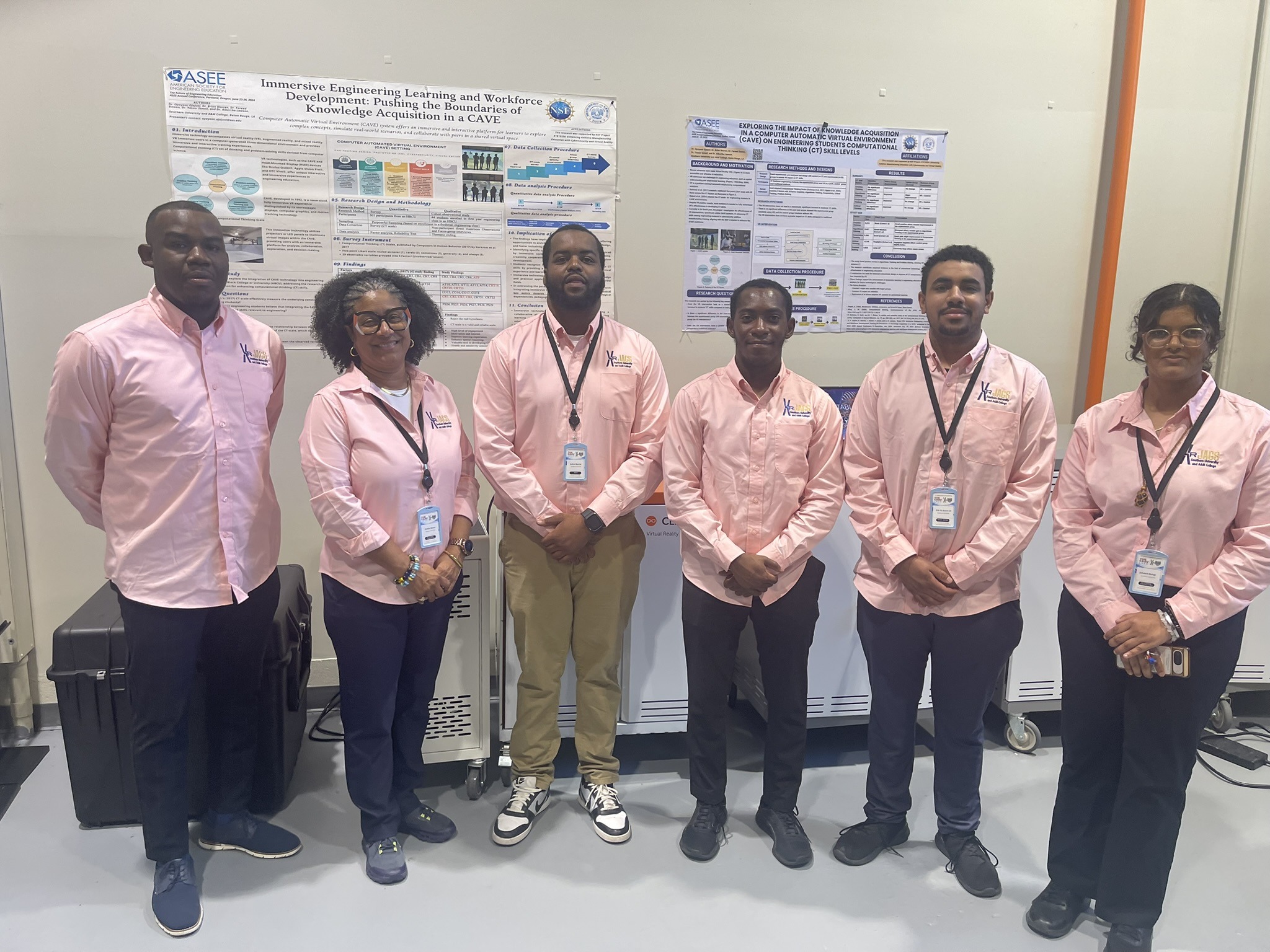
Southern University's own research supports the CAVE as a learning space. A 2024 ASEE paper by Southern researchers studied first-year engineering students who learned cybersecurity and additive manufacturing lessons first in a traditional classroom and then in a CAVE, and reported strong student interest in doing more in the CAVE environment.
05
Why Southern University
Southern University already runs a stationary CAVE on campus, an XR Development Studio that builds VR content with Unity and OpenXR, and research on learning in immersive rooms. SP-07 extends that expertise from a fixed room to a vehicle.
The university describes the Mobile CAVE as a one-of-a-kind, transportable immersive research and training lab, conceived and led by students from concept to completion and outfitted by industry experts. SP-07 is how that student leadership continues after the build: students do not just help create the truck, they operate it.
Southern also has the network, and the people to sustain it. The Mobile CAVE is presented with the CAAV, the Campus Alliance for Advanced Visualization, which connects campuses that run visualization labs. That gives the team a community of peers who run similar systems.
And the truck already has a mission statewide: eight training fields listed on the vehicle, seven sub-projects and partners in education, health, industry and public safety waiting for stops.
06
Who it serves
The six training sub-projects
K-12 education, crisis management, healthcare, exploratory research, manufacturing and drones all depend on SP-07 to deliver their sessions on site.
Southern University students
Students gain hands-on experience in systems integration, projection and tracking, vehicle logistics and live demos.
Host sites across Louisiana
Schools, plants, hospitals, agencies and communities get a working immersive lab at their door, set up and run by a trained team.
Sponsors and the build team
Sponsors get results notes after each stop and visibility at events and on the tour. The build team gets the feedback it needs to improve the unit.
Faculty and researchers
A reliable mobile CAVE lets faculty run studies with new groups of learners outside campus.
07
Why fund it now
The truck's grand opening is coming, with the date to be announced. Operations funding decides how many places it reaches after that. A training lab that sits parked helps no one; SP-07 keeps it moving.
Every sub-project depends on it. Funding SP-07 multiplies the reach of the other six, because each stop serves whichever training domain the host needs.
Students gain career-ready skills while delivering a public service. Funding pays for the time, training and supervision that let students run a statewide technology resource safely.
Funding makes specific things happen: more tour stops, especially at smaller and rural sites; calibration and maintenance so every demo looks right; trained student operators for each season; and the stop-by-stop reports that show sponsors what their support delivered.
08
How it connects
SP-07 carries every other sub-project: K-12 education and mobile STEAM outreach (SP-01), Crisis management and emergency preparedness (SP-02), Healthcare technology and public health VR (SP-03), Exploratory research and advanced visualization (SP-04), Manufacturing technologies and cyber-additive XR (SP-05) and Drone exploration and autonomous aerial systems (SP-06). It draws on the Stationary CAVE for experience with projection rooms and on the XR Development Studio for content. The Vision shows how the truck links campus labs to communities statewide.
09
Questions funders ask
It runs the truck: vehicle engineering, connecting the projection and tracking systems, calibrating the walls, planning each stop, running demos and reporting results.
Students, under the Mobile CAVE program led by Project Director Deidre Hardy Street at Southern University's Office of Research and Strategic Initiatives.
Because a CAVE only works when the images on every surface line up and the tracking matches the viewer. On a truck, that has to be checked at every stop.
An on-site demo lasts about 20 minutes.
A short results note after each stop: who tried it, what they said and what is next.
Yes. Groups get a brief before entering, and visitors keep their shoes on and put shoe covers over them before stepping onto the CAVE floor.
10
Sources
- Cave automatic virtual environment (Wikipedia)
- Immersive Engineering Learning and Workforce Development: Pushing the Boundaries of Knowledge Acquisition in a CAVE (ASEE 2024)
- PwC: VR training study, upskilling and the metaverse
- HBCUs make up just 3% of U.S. colleges but produce 28% of Black STEM graduates (TheGrio, on UNCF's report)
- The CAAV, Campus Alliance for Advanced Visualization