01
At a glance
Sub-project code
SP-05 · ADV-MFG, one of seven sub-projects on the Southern University Mobile CAVE
Truck domain
Manufacturing technologies
Aligned program
Enhancing Additive Manufacturing Education with Cybersecurity and Virtual Reality (CSAM), National Science Foundation award DUE-1915520
NSF program
Improving Undergraduate STEM Education (IUSE: EHR), Engaged Student Learning track; budget period October 1, 2019 to September 30, 2024
Project lead
Dr. Karen Crosby (PI), with co-PIs Dr. Amitava Jana, Dr. Patrick Mensah, Dr. Albertha Lawson and Dr. Yasser Ismail
National partners
America Makes, Penn State's CIMP-3D (sub-award for the VR cybersecurity modules) and Bush Consulting Group
Linked training pathway
the AM Lab, a VR plus hands-on 3D printing pathway built around Southern University's labs
Where it reaches people
plants, contractors and technical schools, through the Mobile CAVE
02
What it is
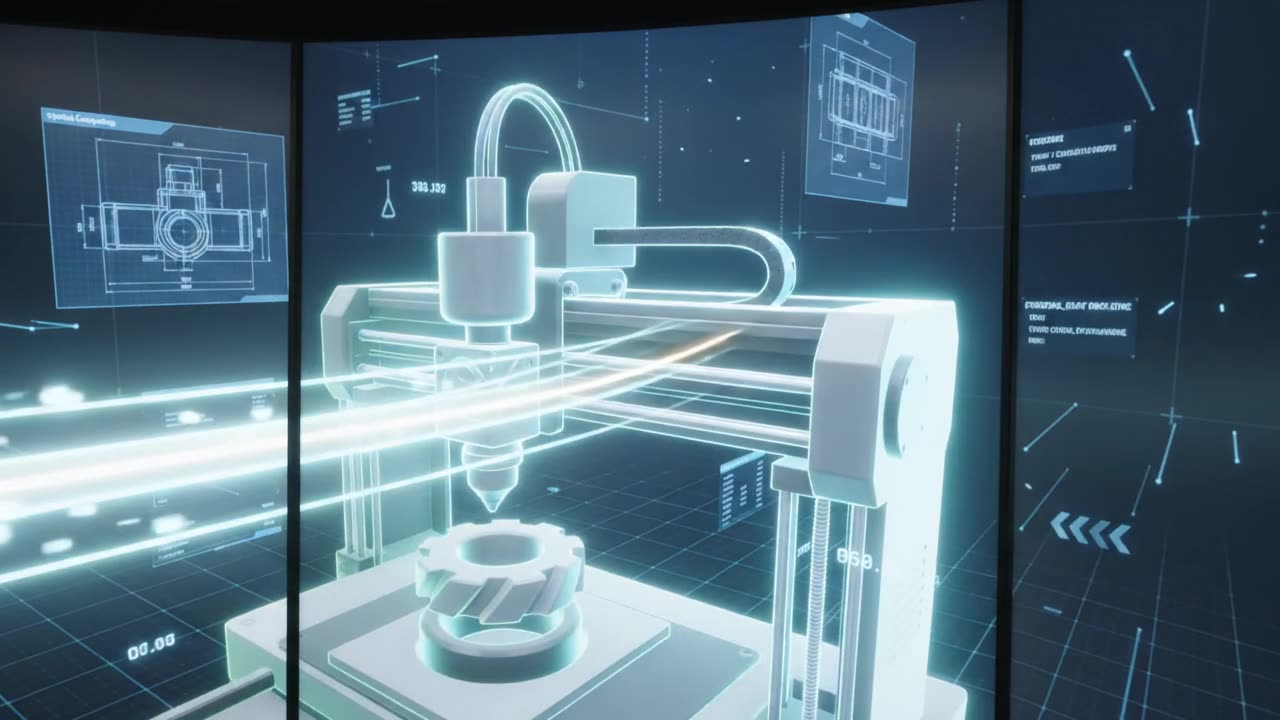
SP-05 is the manufacturing domain of the Southern University Mobile CAVE. It carries one idea into every stop the truck makes: the people who run tomorrow's 3D printers have to understand two things at once, how a part is built layer by layer, and how the digital file behind that part can be attacked.
Additive manufacturing, better known as 3D printing, builds a part from a digital design file one thin layer at a time. That makes it fast and flexible. It also means the part is only as trustworthy as the file and the machine settings that produced it. A design file can be changed in ways no one notices on the shop floor, and the part still comes off the printer looking normal.
Southern University turned that problem into a curriculum. Through the National Science Foundation project "Enhancing Additive Manufacturing Education with Cybersecurity and Virtual Reality," the university set out to create what its own announcement calls the first cybersecurity "spine" in an engineering program at a historically Black college or university. Students learn additive manufacturing, learn where cyberattacks enter the process, and use virtual reality to see how a corrupted file changes a printed object.
The Mobile CAVE takes that learning off campus. Inside the truck, a room-sized 3D projection environment lets a group stand around a printer, open it up and walk through a print job together. The same VR training approach powers the AM Lab pathway, whose two demonstrated modules teach the parts of a printer and how a full print job runs. SP-05 is where the research program, the training pathway and the truck meet.
03
How it works
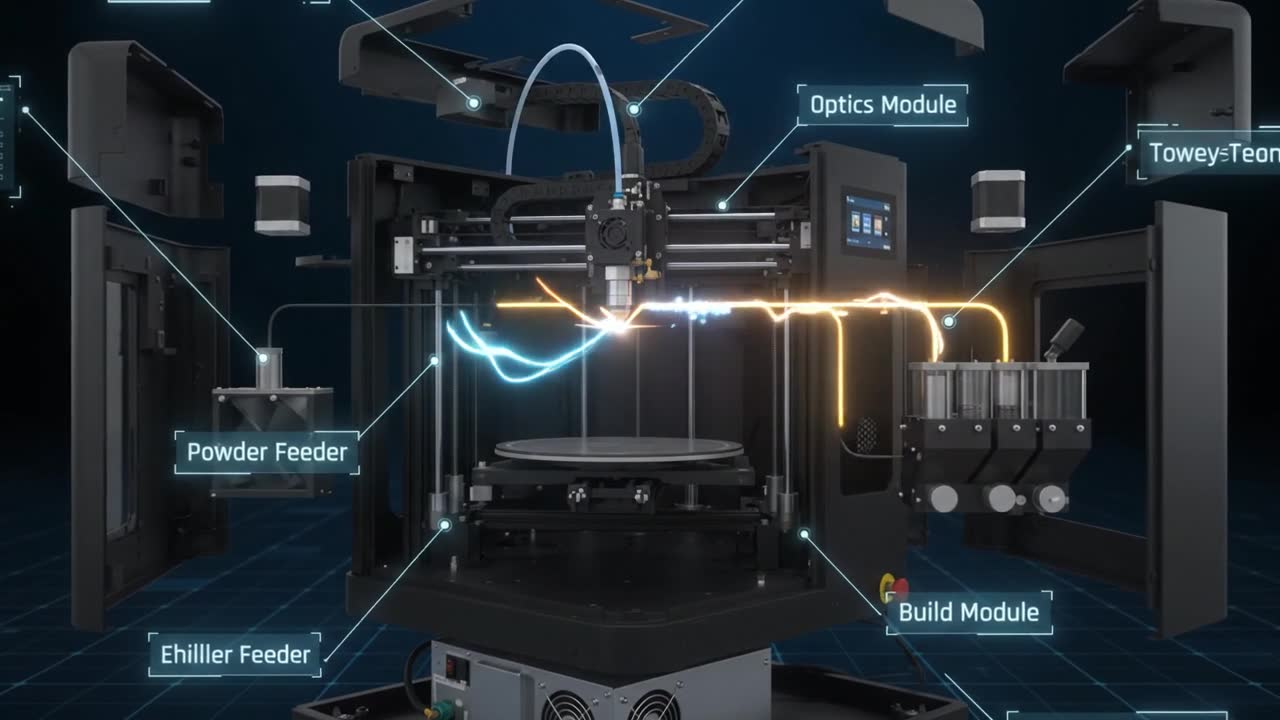
Learners start with the printer itself. In the AM Lab's Printer Components module, they interact with a virtual printer, identify each part, see it highlighted, get guidance and finish with a knowledge check. In the Mobile CAVE the printer is life-size, so a group can point at the same part and talk about it.
The Print Job Operations module takes learners through a full print job in VR: preparing the file, starting the print and watching it build. Mistakes cost nothing. A wrong setting shows its result right away, and the learner runs it again.
This is the step that makes SP-05 different. Southern University's NSF project uses virtual reality so students can see how cyberattacks on digital 3D printer files change a printed object, including changes that go unnoticed unless every layer is watched during printing. Published security research shows why this matters: in 2017, researchers from Ben-Gurion University of the Negev, the University of South Alabama and the Singapore University of Technology and Design sabotaged the design file of a 3D-printed drone propeller so that it failed in flight and the drone was destroyed.
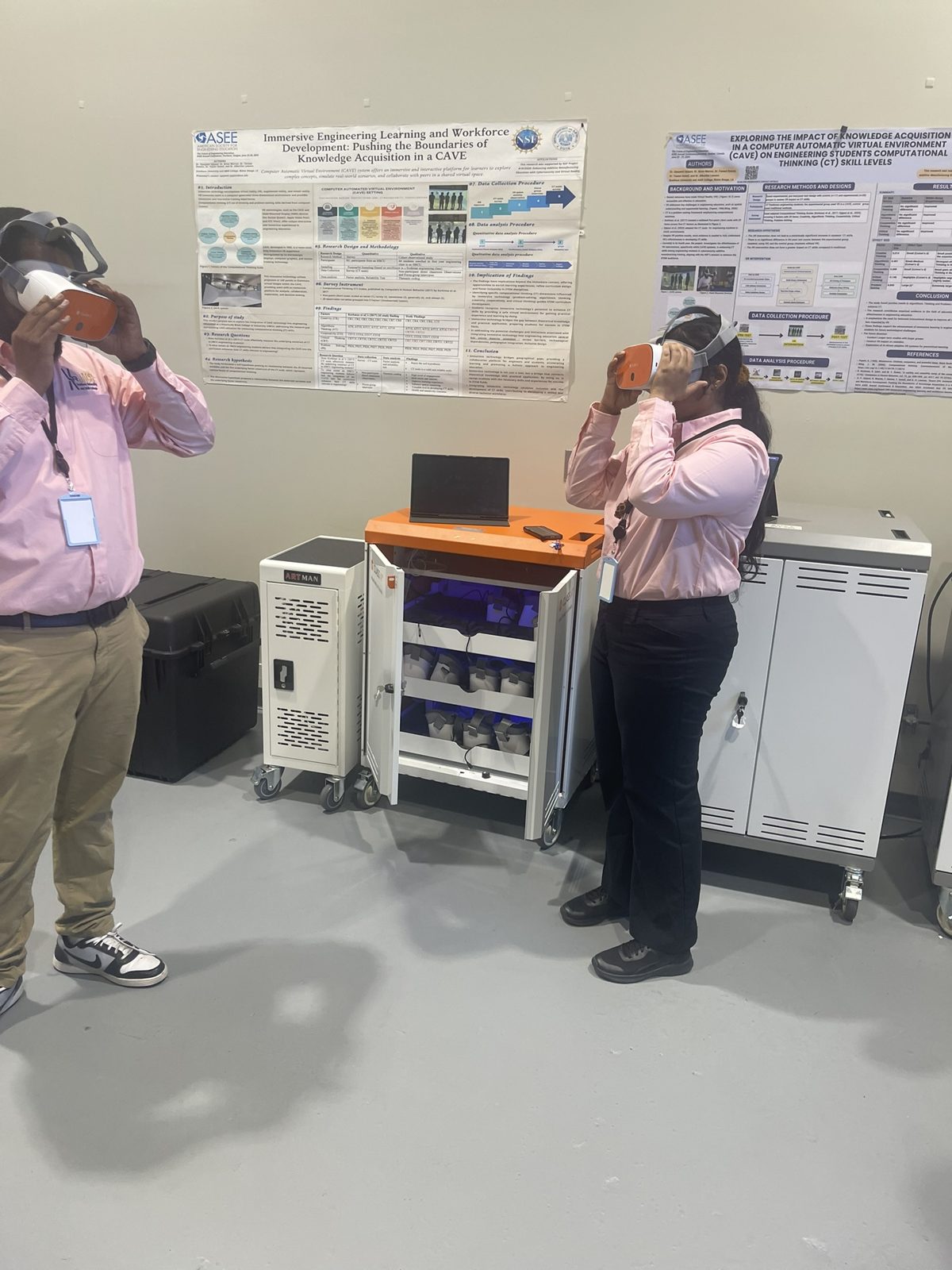
The NSF project also studies whether VR builds computational thinking: breaking a problem into parts, spotting patterns, setting aside what does not matter and working step by step. The project measures this with the Computational Thinking Scale before and after training, plus student interviews. A 2024 ASEE paper by Southern University researchers reports a refined set of computational thinking scales for HBCU engineering students, built from first-year students who learned cybersecurity and additive manufacturing lessons first in a traditional classroom and then in a CAVE.
VR prepares people; it does not replace hands-on skill. In the AM Lab pathway, hands-on printing happens with an instructor, at a print station that travels with the truck or at the host site. Learners finish by designing, printing, inspecting and presenting a real part.
The Mobile CAVE parks at a plant, school or technical college. SP-05's first audience on the tour is plants, contractors and technical schools, starting with a pilot session for each new site.
04
Impact
A local workforce need
Louisiana's industrial economy needs more skilled people than it can find. A December 2023 BIC Magazine article cites economist Dr. Loren Scott on $154 billion in industrial projects in the pipeline across New Orleans, Baton Rouge and Lake Charles, and as many as 5,400 more industry workers needed in two years, including 2,000 electricians, 500 instrument technicians, 700 millwrights and 2,200 pipefitters and contract welders. Nationally, Deloitte and the Manufacturing Institute report that U.S. manufacturing could need as many as 3.8 million new employees between 2024 and 2033, and that about 1.9 million of those jobs could go unfilled if the skills and applicant gaps are not addressed.
Training without pulling people off the line
Plant training usually means taking workers away from production or sending them to a training center. SP-05 brings the training to the site. A crew can walk through a printer, a print job and a security failure in a short session, then go back to work.
An HBCU route into advanced manufacturing
HBCUs make up about 3% of U.S. colleges and universities, yet they awarded 28% of the STEM bachelor's degrees earned by Black students, according to UNCF's 2026 report "HBCUs Still Punching Above Their Weight." SP-05 builds on that strength. It gives Southern University engineering students a skill set that pairs manufacturing with cybersecurity, two fields with heavy hiring demand, and it lets them carry that knowledge to communities across the state.
Learning that does not depend on reading alone
A student who struggles with dense text can still grasp a printer when they can walk around it, take it apart and see what changes when a setting changes. That widens who can succeed in technical training.
Additive manufacturing has moved from prototypes into real parts for aerospace, medical, energy and defense uses. Southern University's own metal lab reflects that shift: it runs an InssTek MX-Lab powder-fed laser printer, an Aconity3D laser powder bed printer, an EDMMax 434W wire EDM, a Mazak Quick Turn 20 lathe and a Hysitron TriboIndenter for testing materials.
As parts become critical, the digital chain behind them becomes a target. The NSF award abstract for Southern's project describes additive manufacturing as a leading target for infrastructure cyberattacks and sets the goal of teaching students to detect, address and prevent those attacks. The drone propeller study shows the stakes in plain terms: a file change that weakens a part's fatigue life can bring down the machine that depends on it.
Virtual reality is what makes this teachable at scale. A printer is expensive and a sabotaged part is dangerous; a virtual printer is neither. In VR, the instructor can show a hidden void inside a part, slow the build down, rewind and run the same job clean. PwC's study of VR training found learners trained up to four times faster than in a classroom and up to 275% more confident applying what they learned, with VR becoming cheaper than classroom training at scale.
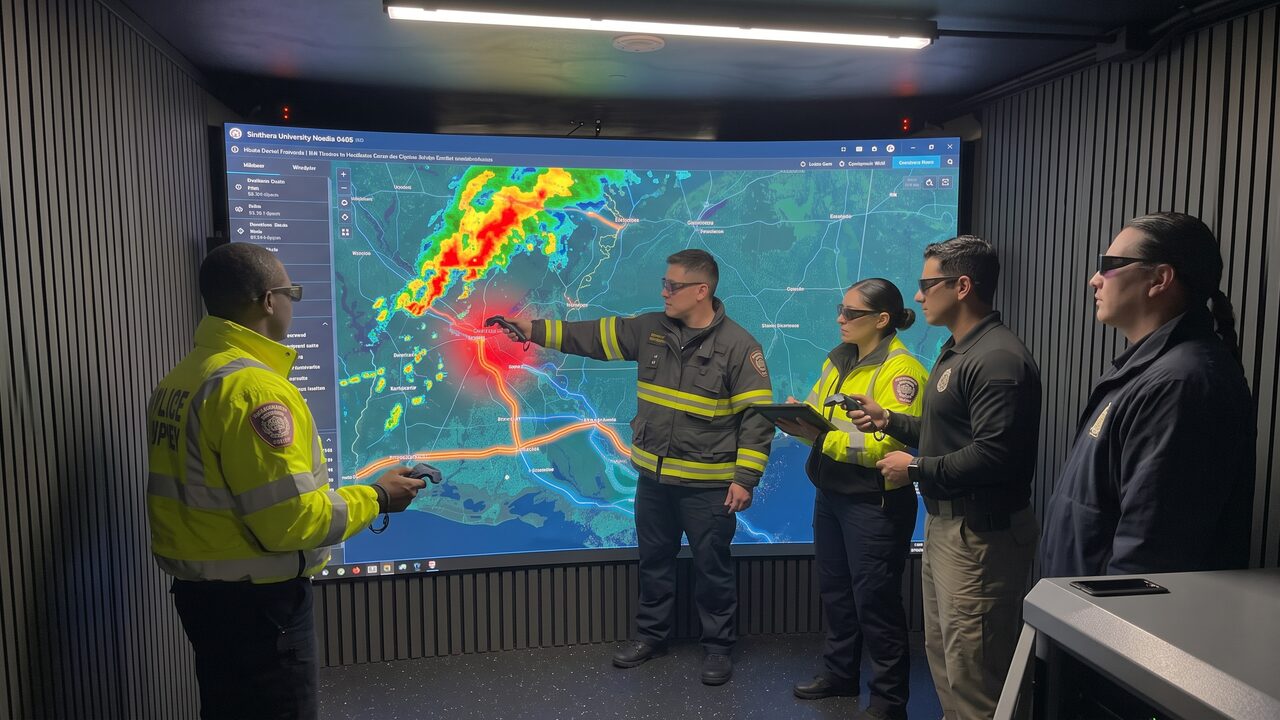
The Mobile CAVE adds a group dimension. Headsets isolate each learner; a CAVE puts a team in the same 3D space, wearing 3D glasses, so they can discuss the same part at the same time. That fits how plants actually work: in crews.
05
Why Southern University
Southern University already built the foundation. The NSF CSAM project put cybersecurity modules into mechanical engineering courses from freshman to senior level (ENGR 120, MEEN 252, MEEN 335, MEEN 450 and MEEN 451), created a general elective in cybersecurity and studied VR's effect on computational thinking. Earlier in 2019, Southern also announced a Center of Excellence for Cybersecurity.
The university has the partners to scale it. America Makes, the national accelerator for additive manufacturing and 3D printing, partners on sharing the educational content. Penn State's Center for Innovative Materials Processing through Direct Digital Deposition (CIMP-3D) holds a sub-award to help build and deploy the VR cybersecurity modules. Southern also hosted a virtual additive manufacturing workshop with participants including LSU, Louisiana Tech, ASTM and Penn State.
It has the labs. The metal and polymer labs, the XR Development Studio and the stationary CAVE are already on campus. The AM Lab pathway was built on Unity and OpenXR, the same tools the XR studio uses, so the training content and the people who build it already work together.
And it has the students. The Mobile CAVE is described by the university as conceived and led by students, from concept to completion. SP-05 gives those students a direct line from their research into plants and classrooms.
06
Who it serves
Plants and manufacturers
New hires and current crews learn printer parts, print jobs and file security without leaving the site or stopping the line.
Contractors and the trades
Contract crews who work across many plants get a short, consistent session on what additive manufacturing is and how it fits their work.
Technical schools and community colleges
Programs without a 3D printer of their own can still teach the machine, the process and the security risks, then point students toward hands-on printing.
Southern University engineering students
Students in the CSAM courses and the AM Lab pathway get a security-aware manufacturing skill set and a public platform to teach others.
Faculty and researchers
The Mobile CAVE extends the computational thinking research beyond campus, so faculty can study learning with new groups of learners.
07
Why fund it now
The need is immediate. Louisiana's industrial pipeline and the national manufacturing shortfall both point to the same gap: more skilled people, sooner, with digital skills built in. SP-05 trains them where they already are.
The groundwork is paid for and proven. The NSF project already produced course modules, VR training and a validated way to measure computational thinking at an HBCU. Funding SP-05 carries that work from campus courses to plants, schools and communities across the state.
Security cannot wait for the workforce to catch up. As more critical parts come off 3D printers, the people who run those printers need to recognize a tampered file before it becomes a failed part. Teaching that now prevents costly failures later.
Funding makes specific things happen: more pilot sessions at plants and technical schools, new VR scenarios built with industry partners for the machines they actually use, instructor time for hands-on printing at each stop, and research that measures what learners gain.
08
How it connects
SP-05 is the Mobile CAVE side of the AM Lab pathway. It draws on the Metal 3D printing lab and the Polymer 3D printing lab for real machines and real parts, and on the XR Development Studio for the VR content. The Computational thinking research study measures what learners gain. Student-led Mobile CAVE systems integration (SP-07) keeps the truck, projection and tour running so SP-05 can reach each site. The Vision ties these together into one pathway from campus to the workplace.
09
Questions funders ask
It is grounded in a funded NSF project, award DUE-1915520, with a named research team, course modules in five engineering courses, national partners and a peer-reviewed 2024 ASEE paper on computational thinking in a CAVE.
Because a 3D-printed part depends on its digital file. Published research shows a sabotaged file can make a part fail in use. Workers who understand that risk catch problems earlier.
No. VR prepares learners to work safely and understand the process. Hands-on printing happens with an instructor, at a traveling print station or at the host site.
Plants, contractors and technical schools, starting with a pilot session at each site.
Because the people who need training are at plants and schools across Louisiana. The truck brings the lab to them, so no one has to build or travel to one.
The NSF project already uses the Computational Thinking Scale before and after training plus interviews. SP-05 extends that approach to learners on the tour.
10
Sources
- Southern receives $1.65M NSF grant to study cybersecurity for 3D printing (Southern University)
- CSAM: Enhancing Additive Manufacturing Education with Cybersecurity and Virtual Reality (Southern University)
- NSF DUE-1915520 award summary (Grantome)
- Immersive Engineering Learning and Workforce Development: Pushing the Boundaries of Knowledge Acquisition in a CAVE (ASEE 2024)
- dr0wned – Cyber-Physical Attack with Additive Manufacturing (USENIX WOOT 2017)
- Skilled workers needed for Louisiana's industrial construction boom (BIC Magazine, December 13, 2023)
- Manufacturers need as many as 3.8 million new employees by 2033 (The Manufacturing Institute)
- HBCUs make up just 3% of U.S. colleges but produce 28% of Black STEM graduates (TheGrio, on UNCF's report)
- PwC: VR training study, upskilling and the metaverse