01
At a glance
What it is
A connected set of Southern University labs, programs and a traveling 3D training room that together form one pathway into advanced manufacturing and immersive technology.
The pieces
Seven campus labs and programs (metal printing, polymer printing, the XR Development Studio, the stationary CAVE, classroom VR, computational thinking research and the CAVE chemistry demo), the Mobile CAVE truck, and the AM Lab 3D printing track.
The method
Practice first in virtual reality or the CAVE, then train on real equipment with an instructor.
The training track
Eight blended modules and a 40-hour introduction, with each skill checked and recorded on its own.
Who it reaches
Southern University students, K–12 schools and teachers, workforce programs, plants and agencies across Louisiana.
The milestone
The Mobile CAVE grand opening will be at Southern University in Baton Rouge; the date will be announced.
The track record
First HBCU to partner with America Makes (2017); a $1.65 million NSF grant for 3D printing cybersecurity education with virtual reality (2019); a $6.2 million federal award for VR teacher training and digital access (2023).
02
What it is
Southern University is building something larger than a single lab. It is building a pathway. At one end, a student, a teacher or a plant worker puts on a VR headset or steps into a 3D projection room and learns how a machine works without any risk. At the other end, that same person stands at a real 3D printer, a metal printer or a precision cutting machine and does the work under supervision. Everything in between, the lessons, the research, the equipment and the people, is designed to move learners along that path.
The pathway has three layers. The first is the campus labs that already exist: a metal additive manufacturing lab with five named machines, two polymer labs that print and test plastics, an XR Development Studio that builds VR lessons, a stationary CAVE projection room, a classroom VR program for K–12 schools, an NSF-supported research study on computational thinking, and the CAVE demonstrations used with visitors. The second layer is the Southern University Mobile CAVE, a transportable, interactive 3D training room on a truck that students built and industry experts outfitted. The third layer is the AM Lab, the 3D printing track that teaches additive manufacturing through VR modules, simulation and supervised practice.
Each layer feeds the next. The XR Development Studio builds the lessons. The CAVE rooms and headsets deliver them. The polymer and metal labs supply the real machines that the lessons point toward. The research study measures whether the approach works. The Mobile CAVE takes the whole idea off campus to the places where people live and work.
This document explains what each piece does, why it matters, and why Southern University is the right institution to lead it. The fourteen companion documents go deeper into every lab and every Mobile CAVE sub-project.
03
How it works
A learner starts in a virtual environment. In the AM Lab prototype, Module 2 (Printer Components) lets learners identify printer parts on an interactive 3D model, with highlighted parts, guidance and a knowledge check. Module 6 (Print Job Operations) walks them through a full print job from preparation to simulated completion, with feedback. The same lessons run on VR headsets in a classroom or with 3D glasses inside the Mobile CAVE.
The Mobile CAVE parks at a plant, school, college or agency site. Learners step inside, put on 3D glasses and work through the modules as a group. Nobody has to travel to campus, and an employer does not have to send a crew away for training.
Virtual practice prepares learners. It does not replace physical equipment training or required safety certification. Module 8 (Applied Manufacturing Project) runs at a print station that travels with the truck or at a partner site, where learners design, print, inspect and present a real object with an instructor.
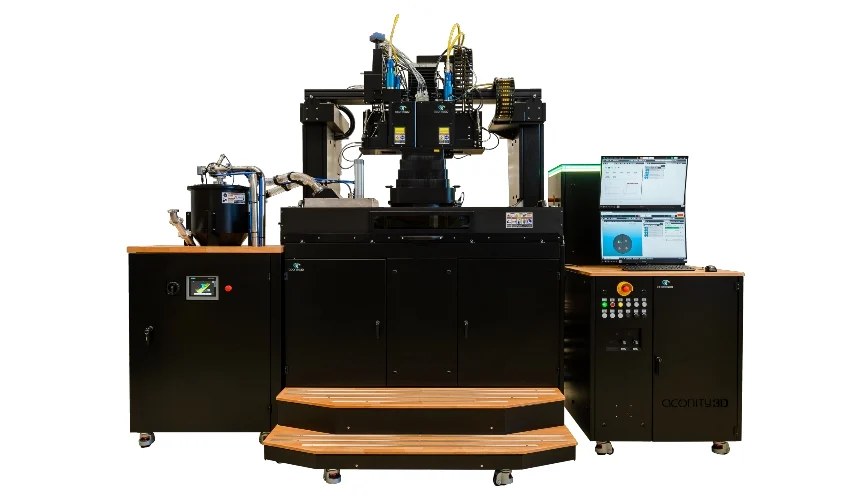
Learners who continue reach the campus labs: the polymer labs for design, printing and materials testing, and the metal lab, which is being set up mainly for graduate research, for parts built from metal powder and wire.
The XR Development Studio uses Unity and the OpenXR standard to build VR apps for teaching and research. The AM Lab printer modules were built with the same tools, so new modules can be added for new equipment, new jobs or new industries.
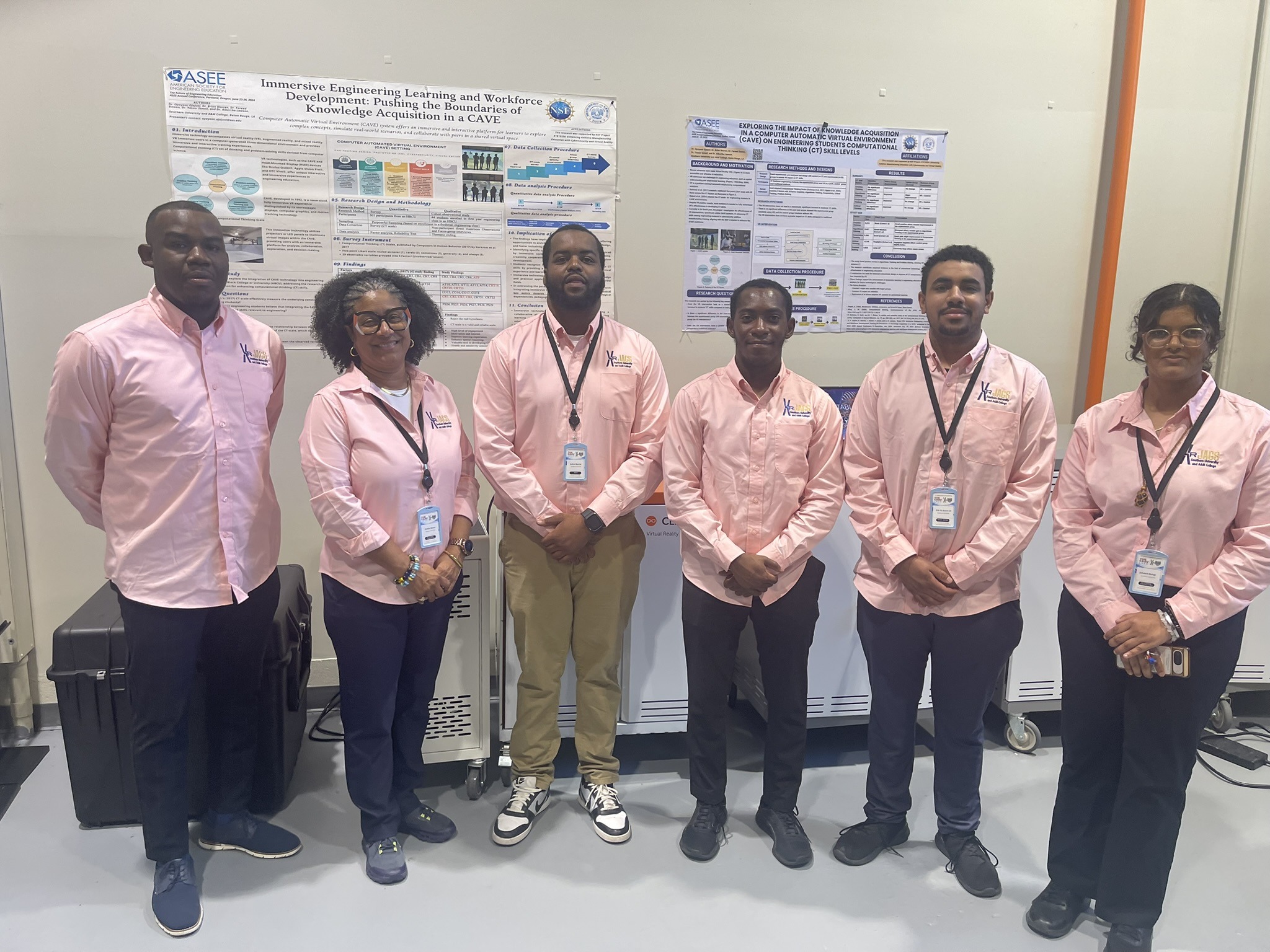
Southern University researchers study how immersive learning affects students' computational thinking. Their published work with 301 engineering students validated a computational thinking survey for HBCU students and recorded high engagement in the CAVE. That research loop keeps the program honest about what it achieves.
04
Impact
Opening technical careers to more people
Hands-on manufacturing training is expensive. It needs costly machines, materials, supervision and safety procedures, and that limits who gets to practice. A virtual environment gives beginners repeatable practice before supervised hands-on training. The Mobile CAVE removes the travel barrier as well: the training comes to the learner. For rural parishes, small manufacturers and schools with limited budgets, that changes who gets a first look at advanced manufacturing.
Meeting a real labor need
The need is large. The Manufacturing Institute and Deloitte estimate that U.S. manufacturing could need as many as 3.8 million new employees between 2024 and 2033, and that about 1.9 million of those jobs could go unfilled if skills and applicant gaps are not addressed. In Louisiana, a December 2023 industry article reported a combined $154 billion in industrial projects in the pipeline across New Orleans, Baton Rouge and Lake Charles, and a need for as many as 5,400 more industry workers, including 2,000 electricians and 2,200 pipefitters and contract welders. A pathway that starts people in a virtual room and moves them to real machines is built for that need.
The role of an HBCU
Historically Black colleges and universities carry an outsized share of the work of building the country's science and engineering talent. National Science Foundation data show that 25% of the people who earned a science or engineering doctorate between 2013 and 2017 had earned their bachelor's degree at an HBCU. Southern University, an HBCU in Baton Rouge, is positioned to bring advanced manufacturing and immersive technology to students and communities that have often been left out of those fields.
Teachers and young students
The pathway does not start in college. Through SURADD (Southern University Reaching Across the Digital Divide), middle school teacher candidates, clinical educators and university faculty and students use interactive VR spaces for instruction and workforce training. When teachers are confident with the technology, students meet it early, and the pipeline into technical careers starts years sooner.
Virtual practice that holds up
Research supports immersive training where it is used carefully. A 2021 meta-analysis in Human Factors found that virtual, augmented and mixed reality training performs about as well as traditional training, and that its main value is in settings where traditional training is impractical because of danger or cost. Manufacturing equipment is exactly that kind of setting: a mistake on a laser printer or a wire EDM is costly, and first practice on a virtual model is not. PwC's study of VR training found learners finished up to four times faster than classroom learners and were up to 275% more confident applying what they learned, with VR becoming cost-competitive with classroom training at 375 learners.
Additive manufacturing as a core skill
Additive manufacturing builds parts layer by layer from a digital file. In metal, it supports replacement parts, prototypes, custom tooling, small batches and research into parts that combine more than one metal. Alloys such as Inconel 718, which the metal lab lists, are valued in aerospace for corrosion resistance and strength at high temperatures, according to NASA research. Training people who understand both the digital file and the physical part is the skill gap this pathway targets.
Security of the digital file
Southern University adds a dimension most programs miss. Its NSF-funded work studies how cyberattacks on 3D printer files can change a printed part in ways that are hard to detect, and it uses virtual reality to show students how that happens. As manufacturing becomes more digital, the people who run the machines also need to protect the files.
One tool, many industries
The VR approach is not limited to printers. The same method can be built around any industry's equipment and jobs: healthcare, energy, logistics and skilled trades. Southern University lists eight fields for the Mobile CAVE, from K–12 education and crisis management to healthcare, research, manufacturing and drone systems.
05
Why Southern University
A record in additive manufacturing
In 2017 Southern University became the first HBCU to partner with America Makes, the national public-private accelerator for additive manufacturing and 3D printing, as a Silver member. The partnership connects the university's curriculum to America Makes' workforce education roadmap and to the companies in its network.
A record in immersive education research
In 2019 the National Science Foundation awarded Southern University $1.65 million (award DUE 1915520) for "Enhancing Additive Manufacturing Education with Cybersecurity and Virtual Reality," with Penn State's CIMP-3D center as a partner and America Makes helping share the results. Southern University researchers have since published CAVE research at the American Society for Engineering Education.
A record in reaching schools
In 2023 the U.S. Department of Commerce awarded Southern University $6.2 million through the Connecting Minority Communities program for SURADD, which pays for VR equipment and connectivity and expands virtual immersion training for aspiring teachers.
Students who build
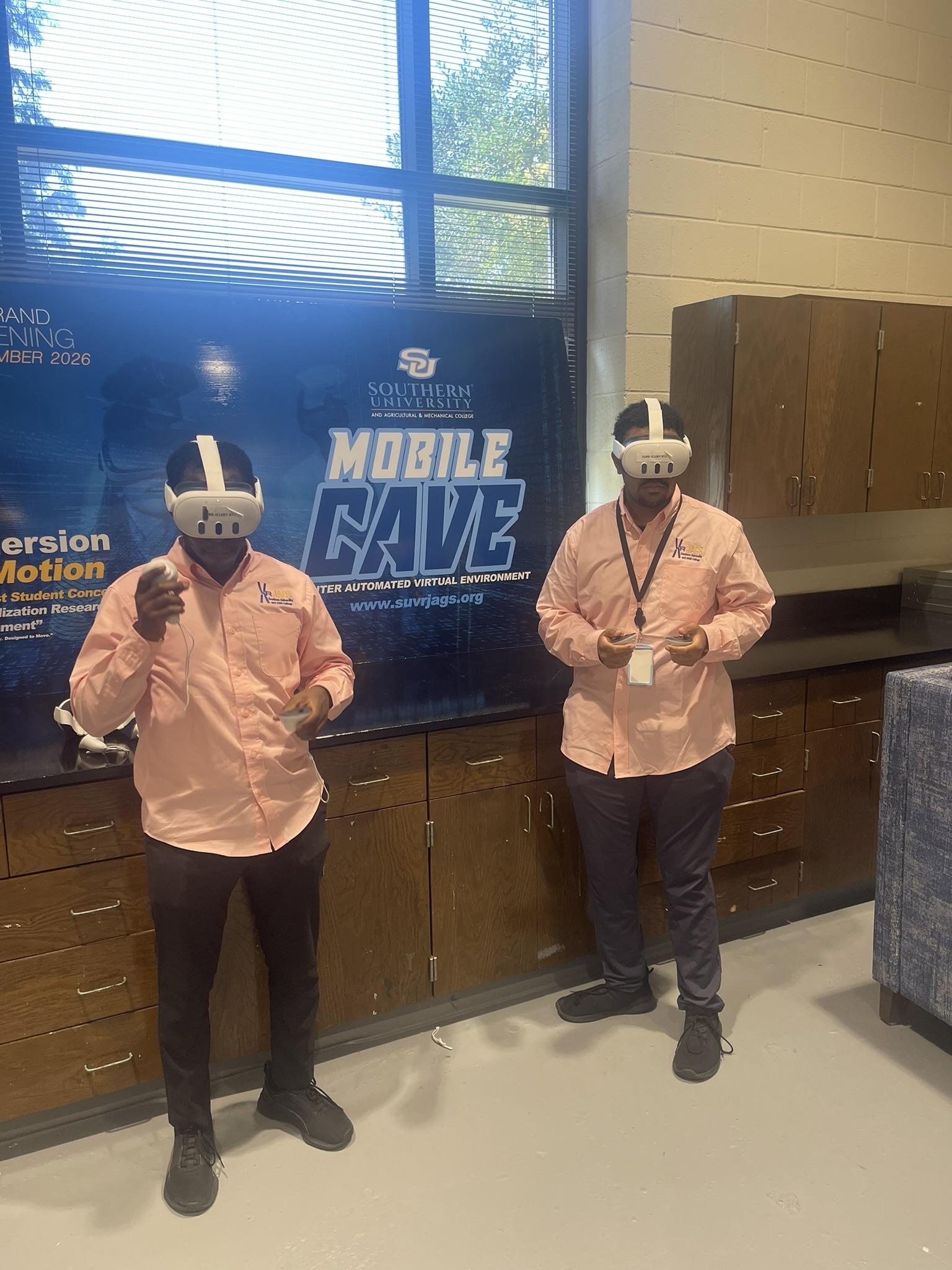
The Mobile CAVE is described as the world's first student-conceived advanced visualization research and training environment: students conceived and built it, and industry experts outfitted it. The XR JAGS student team runs headset demonstrations and works in the XR Development Studio. A program that puts students in charge of building the technology produces graduates who can build it again elsewhere.
06
Who it serves
Southern University students
Engineering, science and education students get access to metal and polymer printing, VR development, CAVE research and the chance to build the tools themselves.
K–12 schools and teachers
Teacher candidates and classroom teachers learn to use VR headsets and lessons, and students meet immersive STEM learning early.
Workers and job seekers
Learners who come through schools, community organizations, workforce centers, reentry programs or direct application can start the AM Lab track and move toward further training, credentials where available, apprenticeships and jobs.
Employers and plants
A plant can book the Mobile CAVE, have its crew practice in 3D at its own site, and connect with a training partner that understands both the virtual and the physical side of manufacturing.
Researchers and faculty
Faculty can request custom VR apps for their teaching or research and use the CAVE and headsets to study how people learn.
Agencies and communities
Public health, emergency response and community groups benefit from the same immersive approach applied to their own scenarios through the Mobile CAVE sub-projects.
07
Why fund it now
The foundation is already in place. The labs exist, the research is published, the VR modules have a working prototype, and the Mobile CAVE is getting ready to open. Funding now does not start a program from nothing; it connects and scales pieces that are already working.
Funding turns the prototype into a full track. Two of the eight AM Lab modules exist as VR lessons today. Support pays to build the remaining simulations, equip the traveling print station, train instructors and run the first cohorts with recorded, skill-by-skill assessment.
Funding extends reach. Every Mobile CAVE visit takes the pathway to a new plant, school or parish. Support for operations, content and staff is what turns a single truck into a statewide training resource.
Funding protects the long-term return. PwC's analysis shows VR training becomes more cost-effective as the number of learners grows. Lessons built once in the XR Development Studio can serve many groups, many sites and many years.
The timing matters. Louisiana's industrial project pipeline and the national manufacturing labor gap are here now, and the people who will fill those jobs are in school today. A pathway that starts them early and moves them to real machines is an investment in the state's workforce for the next decade.
08
How it connects
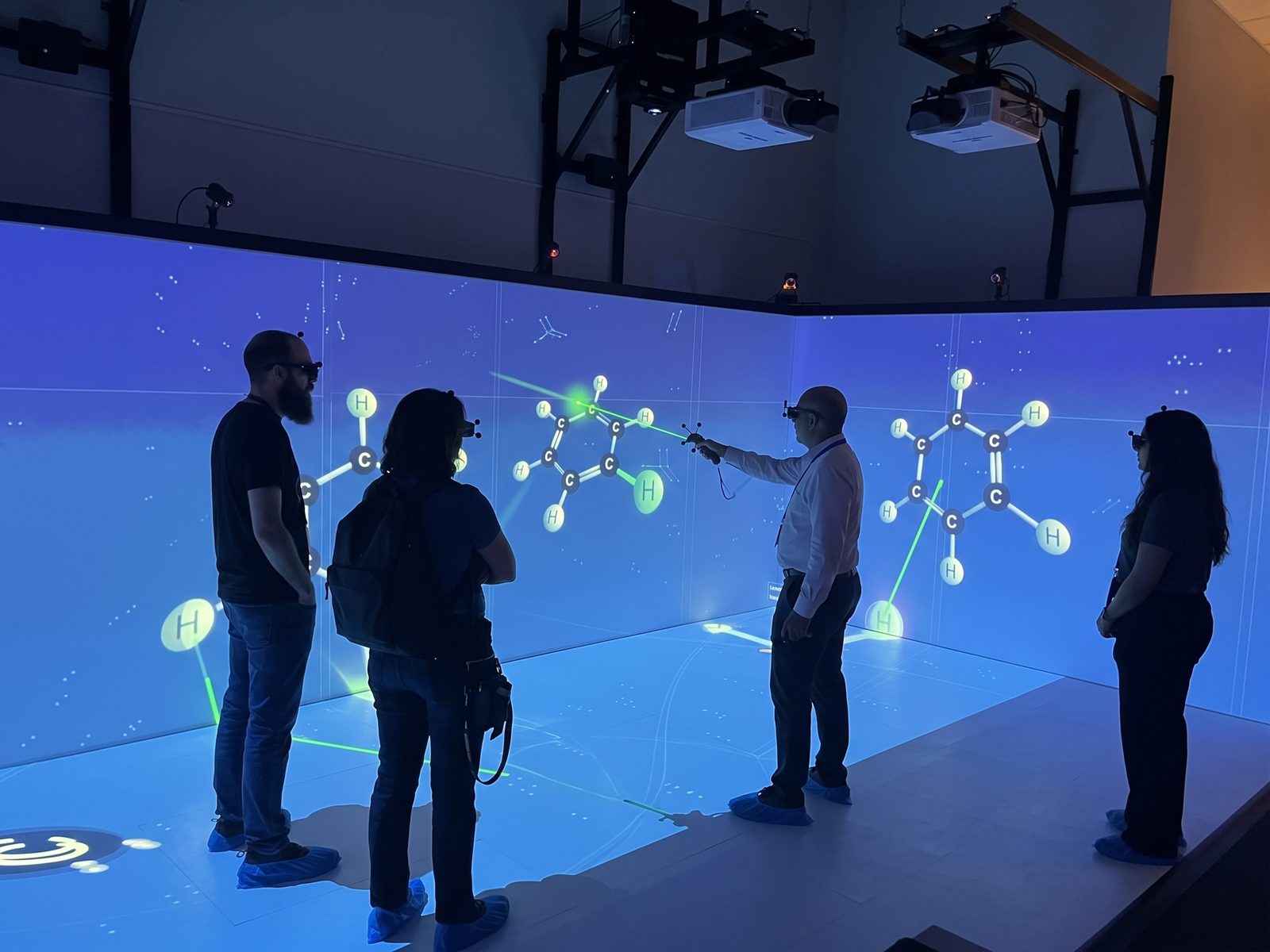
The vision ties every module together. The Metal 3D printing lab and the Polymer 3D printing lab are where learners reach real machines. The XR Development Studio builds the lessons. The Stationary CAVE and the CAVE demo: chemistry molecules show what room-size 3D learning feels like on campus. Classroom VR and teacher training brings headsets to K–12 schools, and Computational thinking research measures the effect on students. On the road, the Mobile CAVE sub-projects apply the same approach to K–12 outreach, crisis management, healthcare, research visualization, manufacturing, drone systems and the student-led operation of the truck itself, with Manufacturing technologies and cyber-additive XR as the direct home of the AM Lab track.
09
Questions funders ask
Both. The labs, the research and the VR prototype already exist at Southern University. The AM Lab track and the Mobile CAVE connect them into one pathway and take it off campus.
No. Virtual practice prepares learners for supervised, hands-on training on real equipment. It does not replace physical training or required safety certification.
A 2021 meta-analysis in Human Factors found immersive training performs about as well as traditional training and is most valuable where real practice is dangerous or costly. PwC found VR learners trained up to four times faster than classroom learners. Southern University's own CAVE study recorded high engagement and collaboration among engineering students.
HBCUs produce an outsized share of the country's science and engineering talent, and Southern University already holds a national additive manufacturing partnership, NSF-funded VR research and a federal VR teacher training award.
Schools, teachers, workforce programs, plants, public agencies and rural communities, mainly through Mobile CAVE visits and the classroom VR program.
Learners who complete skill-by-skill assessments, move on to further training and jobs, and employers and schools that keep booking the Mobile CAVE. Every skill is checked and recorded on its own.
10
Sources
- Southern University Is the First HBCU to Partner With America Makes (Journal of Blacks in Higher Education, 2017)
- Southern University newsroom: America Makes Silver membership (2017)
- Southern receives $1.65M NSF grant to study cybersecurity for 3D printing (Southern University, 2019)
- Southern University CSAM project page (NSF award 1915520)
- Southern University to boost VR teacher training, broadband access (GovTech, January 3, 2023)
- NTIA: Southern University Reaching Across the Digital Divide (SURADD)
- Immersive Engineering Learning and Workforce Development: Pushing the Boundaries of Knowledge Acquisition in a CAVE (ASEE 2024)
- Manufacturers Need as Many as 3.8 Million New Employees by 2033 (The Manufacturing Institute, 2024)
- Skilled workers needed for Louisiana's industrial construction boom (BIC Magazine, December 13, 2023)
- NSF NCSES: Women, Minorities, and Persons with Disabilities in Science and Engineering, field of degree
- Kaplan et al., The Effects of Virtual Reality, Augmented Reality, and Mixed Reality as Training Enhancement Methods: A Meta-Analysis (Human Factors, 2021)
- PwC: VR training hits the ground running (2020)
- PwC: Upskilling and VR training cost analysis
- NASA Technical Reports Server: L-PBF Inconel 718 build-to-build study