01
At a glance
Program
Southern University Reaching Across the Digital Divide (SURADD)
Federal support
NTIA Connecting Minority Communities Pilot Program
Pilot schools
2
Headsets across the pilots
40, kept at the schools for trained teachers to use in class
Lessons
6 middle-school STEM and science lessons on Meta headsets, plus the ClassVR K–12 library
Educators trained
120 (80 middle school science teachers and 40 teacher candidates from the School of Education)
Mobile CAVE link
Sub-project SP-01, K–12 education and mobile STEAM outreach
02
What it is
Classroom VR and teacher training puts virtual reality headsets and STEM lessons into K–12 classrooms and trains teachers to use them as part of normal teaching. It runs through Southern University Reaching Across the Digital Divide (SURADD). The idea is simple: bring the technology to the school, so that every student does not have to travel to a campus lab to learn in 3D.
SURADD received federal support through the National Telecommunications and Information Administration's Connecting Minority Communities Pilot Program. Its stated aim is to decrease the digital divide by forming a K–12 workforce pipeline that brings together middle school teacher candidates, clinical educators, and university faculty and students, using interactive virtual reality spaces and tools in instruction and workforce training. The community it names is Baton Rouge.
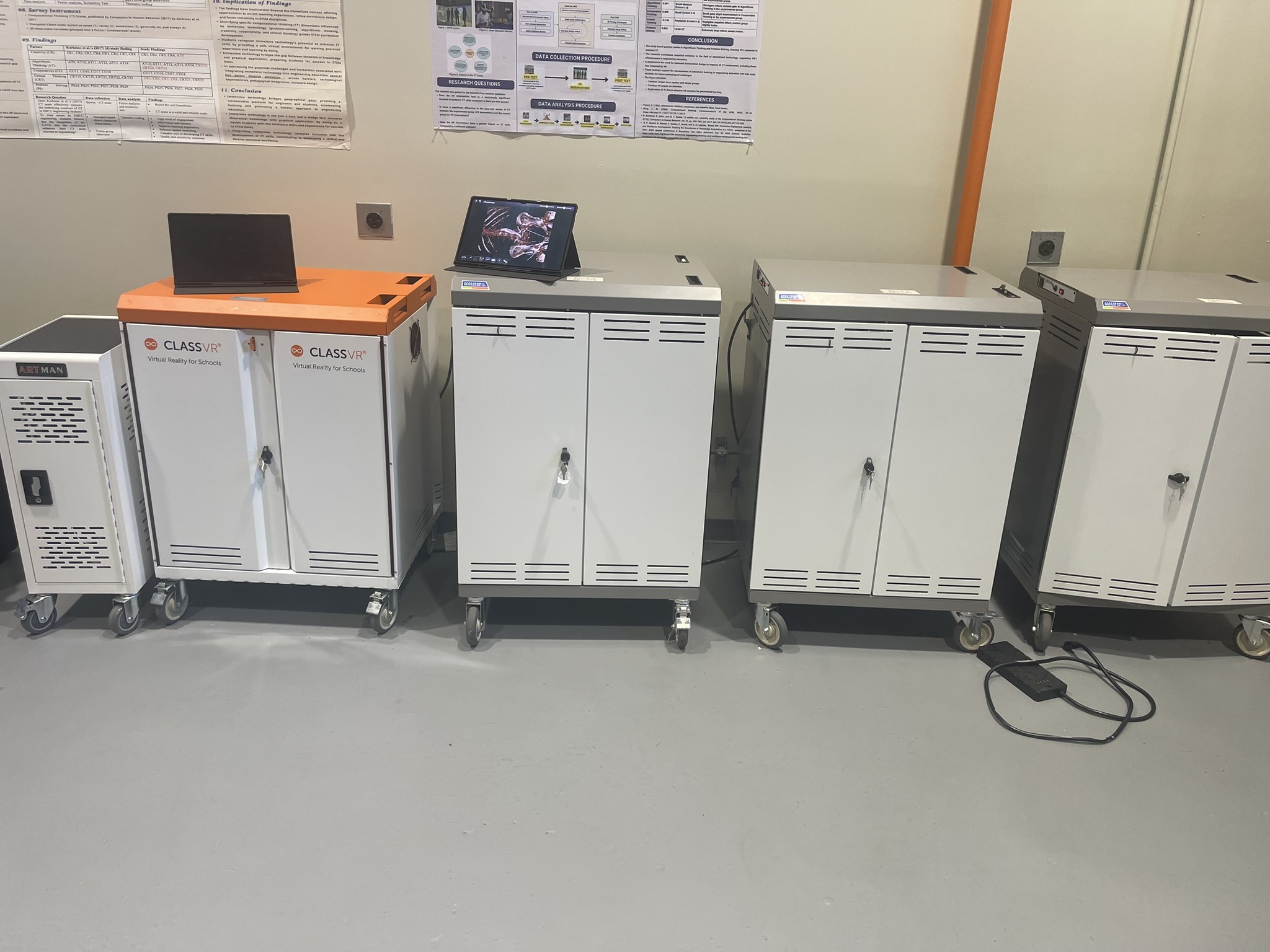
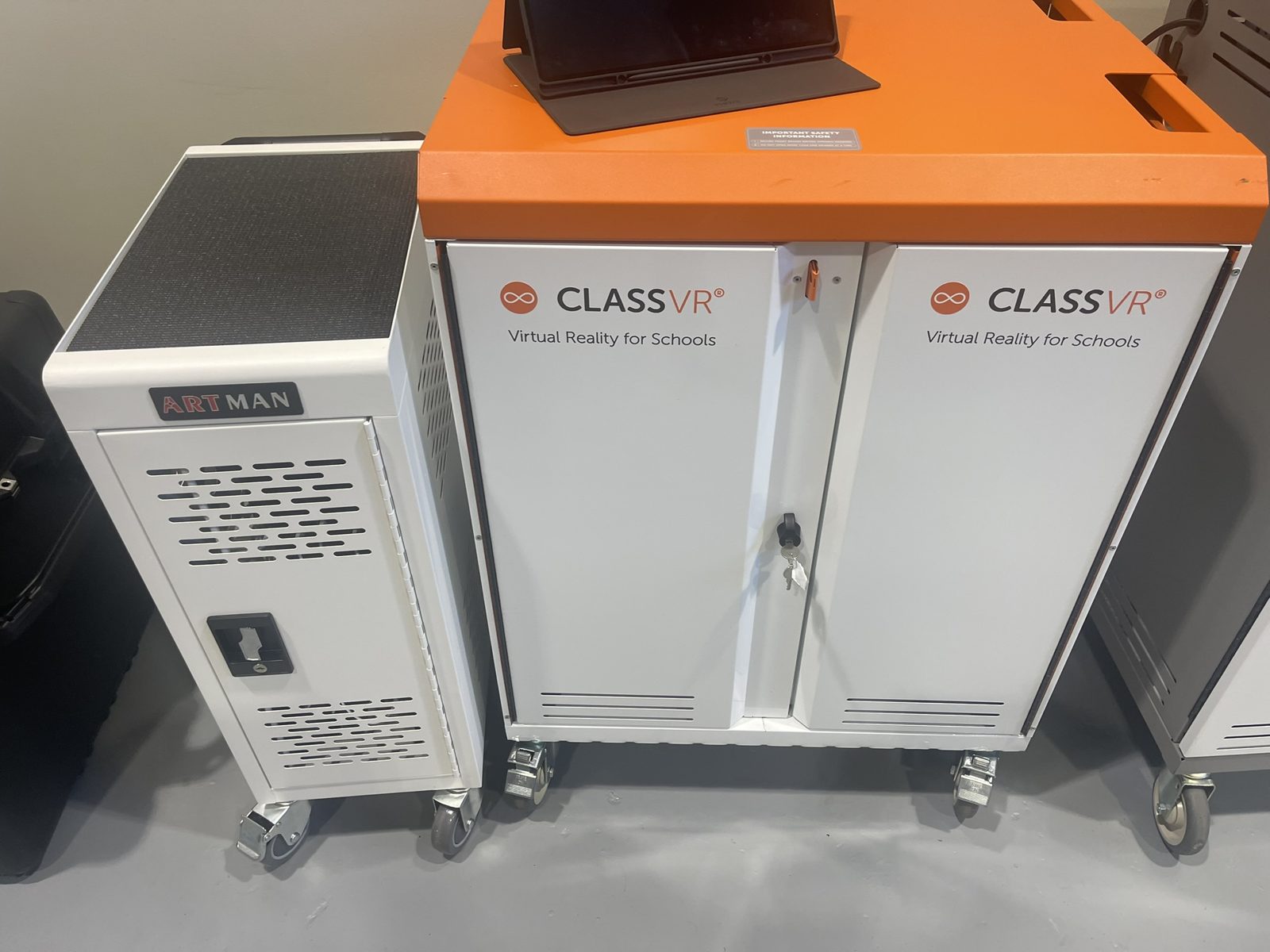
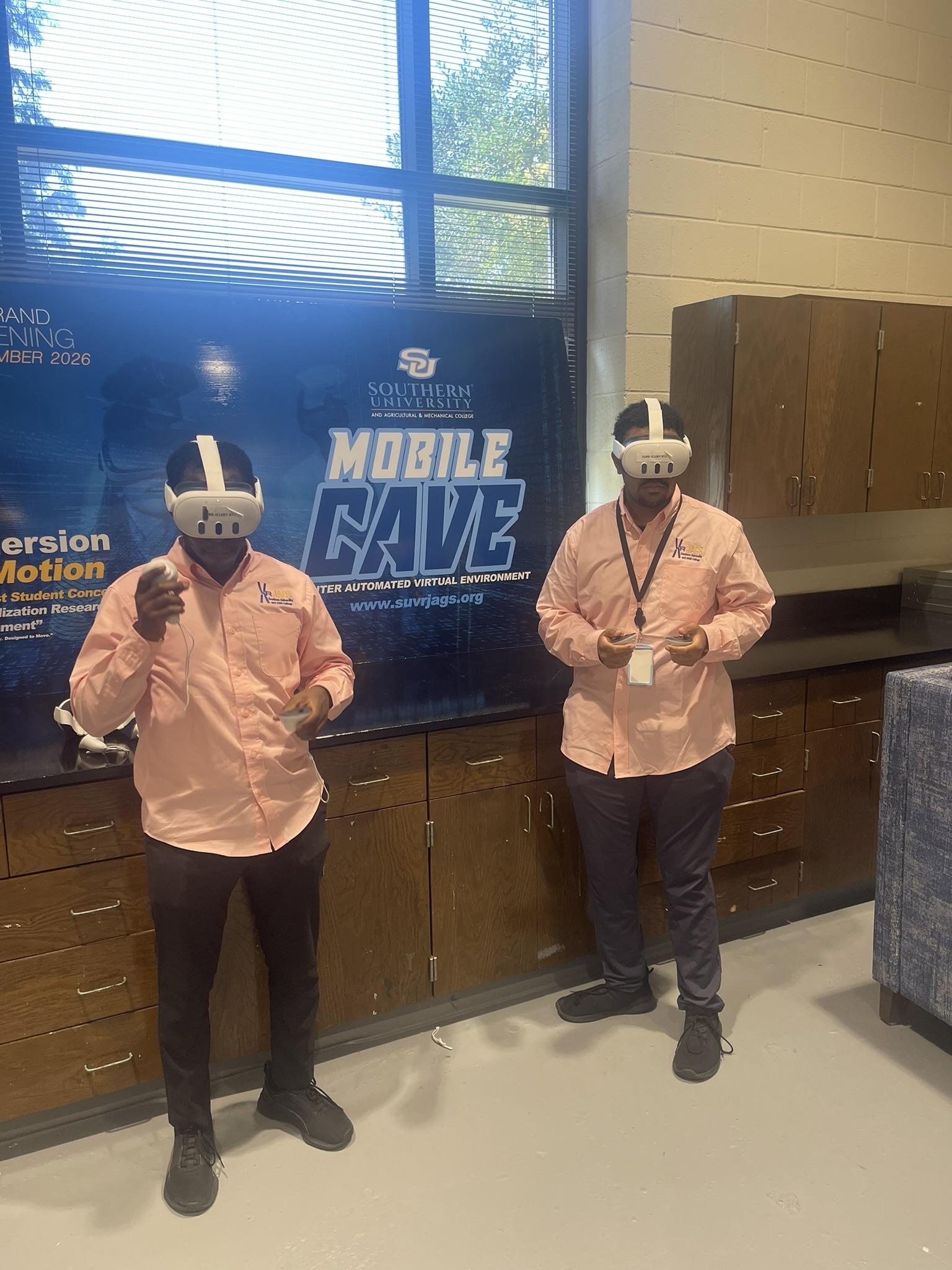
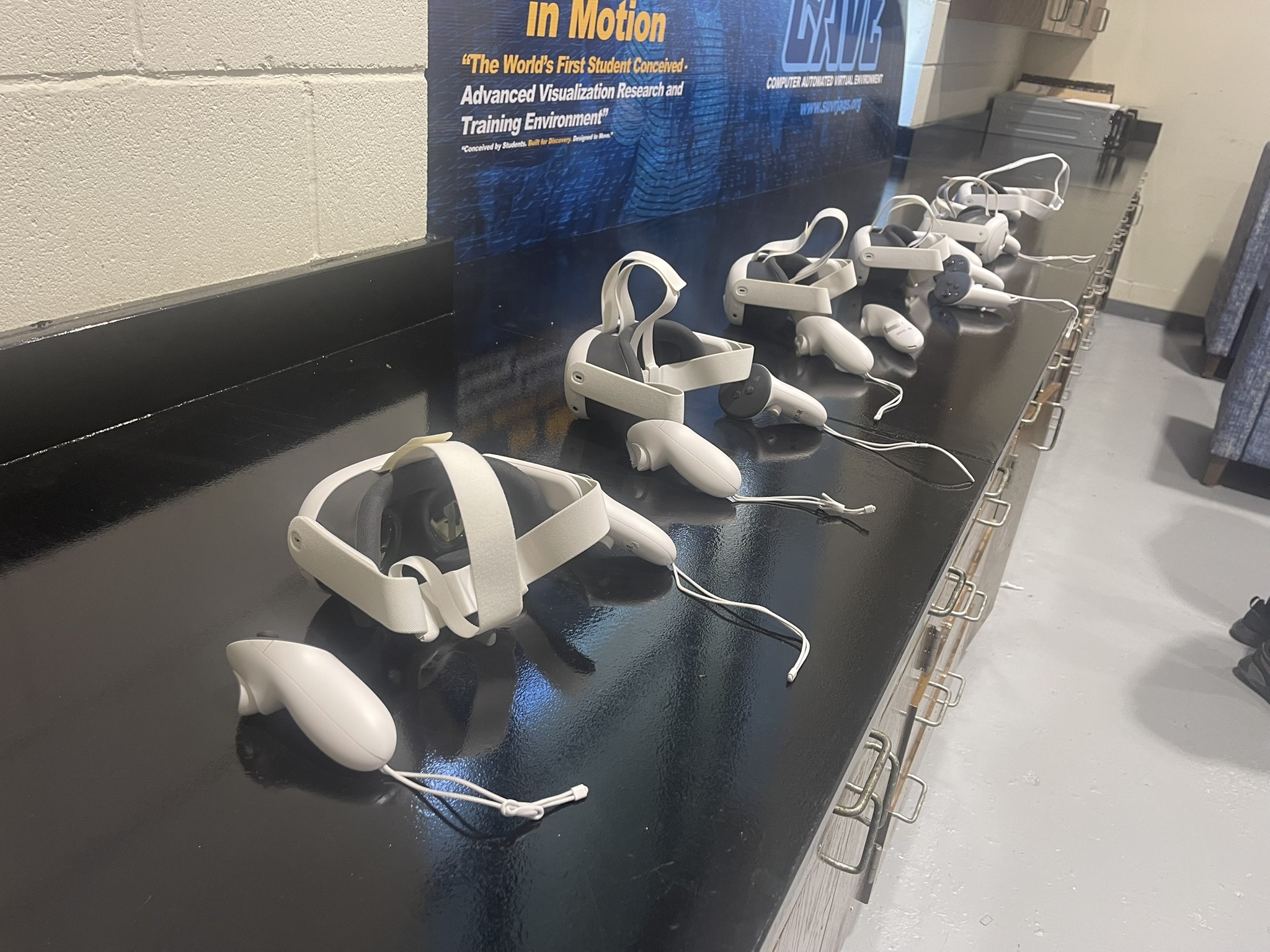
The program uses two kinds of headsets. On Meta headsets, students work through six middle-school STEM and science lessons adapted from an existing curriculum. On ClassVR headsets from Avantis Education, teachers draw on a downloadable library of lessons in math, science, STEM and other subjects. ClassVR headsets charge and travel in wheeled ClassVR carts, so a full class set moves from room to room.
Training two groups at once is deliberate. Working teachers bring the headsets into classrooms right away. Teacher candidates, trained while still in the School of Education, carry the same skills into schools for the length of their careers. Together they turn a one-time equipment purchase into lasting teaching capacity.
The program's numbers as of October 2026: two pilot schools, 40 headsets across the pilots and 120 educators trained. Those educators fall into two groups: 80 working middle school science teachers who use VR in their classes, and 40 teacher candidates from Southern University's School of Education who will carry the skill into their first classrooms.
03
How it works
Schools, science teachers and teacher candidates sign up for the program.
Teachers learn the hardware, the controls, the lessons and the classroom routines: handing out headsets, getting a class into the same lesson and keeping sessions short and safe.
Teachers see how each VR lesson fits a science unit they already teach, so VR supports the curriculum instead of competing with it.
Eligible teachers or schools receive headsets. The headsets stay at the pilot schools, where trained teachers use them in class.
Teachers add VR lessons to their normal schedule. Students see a process, a structure or a place in 3D, then return to the lesson with something concrete to talk about.
Teachers use VR to explain hard ideas and to help students who need more than a diagram on a page, especially students who learn best by seeing and doing.
04
Impact
Closing the digital divide where it starts
Access to new technology is uneven, and the gap opens early. SURADD was funded to reduce the digital divide in minority communities, starting with middle school teachers and their students. A class set of headsets in a neighborhood school gives every student in the room the same chance to try it, regardless of what they have at home.
Teachers as the multiplier
A headset without a trained teacher sits in a cart. By training 120 educators, the program builds capacity that lasts longer than any single device. Each trained science teacher reaches new classes every year, and each teacher candidate starts a career already comfortable with immersive tools.
Louisiana is moving, and the work has to keep pace
Louisiana's students have made real gains on national tests. On the 2024 National Assessment of Educational Progress, Louisiana rose to 32nd overall, up from 49th five years earlier, and its fourth graders led the country in reading progress. Eighth-grade reading held steady. Sustaining that progress into middle school science and math is where hands-on tools like classroom VR help keep students engaged.
Lessons rooted in Louisiana
Southern University's VR work in schools ties science to students' own surroundings. BEE-Tech, the university's NSF-funded VR professional development project, uses simulated field experiences of Louisiana's wetlands and their link to flooding, in place of field trips many schools cannot afford. That approach makes STEM concepts relevant to the communities students live in, and it shows the kind of local content classroom VR can carry.
A pipeline into STEM degrees and jobs
HBCUs award 28% of the STEM bachelor's degrees earned by Black students while making up about 3% of U.S. colleges, according to UNCF's 2026 report. Classroom VR reaches students years before college, and Southern University is a next step on that path.
Classroom VR has matured into a school product. Education platforms add classroom control and ready-made content. ClassVR reports use in more than 90 countries by more than 2 million students, with headsets designed for K–12 and curriculum-aligned content libraries. That maturity makes it practical for a public school to run VR as a normal lesson, not a special event.
Research supports the approach and also shows what makes it work. A 2025 systematic review and meta-analysis of VR in teacher education in Frontiers in Virtual Reality names the barriers schools face, including cost, motion sickness, physical discomfort and content that does not match curriculum goals. It recommends VR activities aligned with instructional goals, guided feedback and reflection, short well-structured sessions, and in-service training that fits teachers' schedules. SURADD's design follows those findings: lessons are matched to existing science units, teachers are trained before they teach, and the headsets stay in the school where teachers can use them in short, planned sessions.
Classroom VR also connects to Southern University's larger set of immersive tools. Individual headsets give each student a personal lesson; the Mobile CAVE brings a shared 3D room to a school; the stationary CAVE supports advanced work on campus. Lessons built in the XR Development Studio can move across all three.
05
Why Southern University
Southern University prepares teachers. Its School of Education trains teacher candidates, and its Department of Science and Mathematics Education connects education research with science and engineering faculty. That puts the university in a natural position to train teachers on new tools at scale.
The university already has deep experience with educational VR. Its Department of Agricultural Sciences leads BEE-Tech, a National Science Foundation-funded VR professional development project for middle and high school teachers that uses simulated field experiences of Louisiana wetlands in place of field trips many schools cannot afford. Faculty in engineering and education have studied VR and CAVE learning with first-year engineering students. SURADD builds on that base.
It also fits the university's mission. Southern was founded in 1880 to educate Black Louisianans, was named a land-grant college in 1890 and is today the only HBCU system in the country. Taking modern learning tools into neighborhood schools is a direct expression of that public mission.
06
Who it serves
Middle school students
Students explore STEM and science content in 3D during normal class time, in their own school.
Working science teachers
Eighty middle school science teachers learn to use VR as part of their regular units.
Teacher candidates
Forty future teachers from the School of Education graduate already trained in immersive teaching.
Schools and districts
Pilot schools receive class sets of headsets, lessons matched to their units and trained staff.
University faculty and students
Faculty and university students take part in the workforce pipeline SURADD was funded to build.
07
Why fund it now
The pilots prove the model; growth is the next step. Two pilot schools and 120 trained educators show that headsets, matched lessons and teacher training work together. Funding now expands the same model to more schools, more teachers and more grade levels, using the training and routines already in place.
Funding pays for the parts that make classroom VR last: class sets of headsets and charging carts, content licenses and lesson development, teacher training time and in-school support. The research on VR in teacher education is clear that training and curriculum fit decide whether headsets get used; those are exactly the costs that make the difference.
The timing also lines up with the Mobile CAVE, which is getting ready to open. Its K–12 sub-project gives schools a shared 3D room on a truck, while classroom VR gives every student a personal headset. Funding both lets a school start with a Mobile CAVE visit and keep the learning going all year with headsets in the classroom.
Funding also pays for measuring results. The program can track which lessons teachers use, how often they use them and how students respond, and feed that back into training. Southern University already studies VR learning with its own students (see Computational thinking research), so the evaluation work builds on experience the university has.
08
How it connects
Classroom VR is the school-based side of Southern University's immersive learning work. It shares lessons and tools with the XR Development Studio. It pairs with the Stationary CAVE, which serves advanced teaching and research on campus. It links to Computational thinking research, which studies how VR affects problem-solving. On the Mobile CAVE side, it is the classroom partner to K–12 education and mobile STEAM outreach (SP-01), which is aligned with SURADD. The Vision module explains how all of these fit together.
09
Questions funders ask
No. The teacher leads the lesson, and VR is one tool inside it. Training focuses on matching VR to existing science units and using it in short, planned sessions.
They stay at the pilot schools, where trained teachers use them in class.
Six middle-school STEM and science lessons on the Meta headsets, plus ClassVR's K–12 library in math, science, STEM and other subjects.
Research names comfort as a known barrier and recommends short sessions with guidance. The program trains teachers in classroom routines that keep sessions short and supervised.
As of October 2026: two pilot schools, 40 headsets and 120 educators trained, made up of 80 middle school science teachers and 40 teacher candidates.
Classroom VR gives each student a headset in their own classroom. The Mobile CAVE brings a shared 3D room to the school on a truck. They work best together.
Schools, science teachers and teacher candidates sign up. Teachers learn the headsets and classroom routines, match the VR lessons to the science units they already teach, and then receive headsets for their classes.
10
Sources
- SURADD: Connecting Minority Communities Pilot (NTIA BroadbandUSA)
- Southern University and A&M College funding recipient (Internet for All)
- About ClassVR (Avantis Education)
- Using virtual reality for teacher education: a systematic review and meta-analysis (Frontiers in Virtual Reality, 2025)
- Louisiana students make major gains on national tests (The Advocate)
- HBCUs make up just 3% of U.S. colleges but produce 28% of Black STEM graduates (theGrio, on the UNCF report)
- SU Dept. of Agricultural Sciences receives NSF grant to aid middle and high schoolers (BEE-Tech)
- Southern University and Agricultural & Mechanical College (64 Parishes)
- Classroom VR and teacher training, AM Lab site
- Sub-projects, Immersion in Motion