
Southern University’s labs · 06
Computational thinking research
An NSF-supported study at Southern University asks whether learning in VR helps students build computational thinking, a step-by-step way of solving problems, in cybersecurity and manufacturing.
At a glance
Break it down. Find the pattern. Solve it step by step.
Behind this page: an AI-generated film of a learner training in VR.
More informationWhat it studies
Can VR make students better problem solvers?
Computational thinking means breaking a big problem into small parts and solving them in order. In this study, students use those skills on cybersecurity and manufacturing problems.
Break it down
Split a big problem into smaller pieces.
Spot patterns
Notice what repeats or looks alike.
Keep what matters
Set aside details that don’t change the answer.
Step by step
Write the steps that solve it every time.
How it works
Two groups, one comparison.
Group A
Learns with VR
20 students learned the lessons with VR modules in the CAVE.
Group B
Learns without VR
17 students learned the same lessons through regular teaching.
Both groups took the same computational thinking test before and after the lessons. The study compared how much each group’s score changed on five skills.
Problem solving
The VR group gained more. Small-to-medium effect.
Algorithmic thinking
The VR group gained more. Small-to-medium effect.
Creativity
Small gain for the VR group.
Working together
Small gain for the VR group.
Critical thinking
Little change.
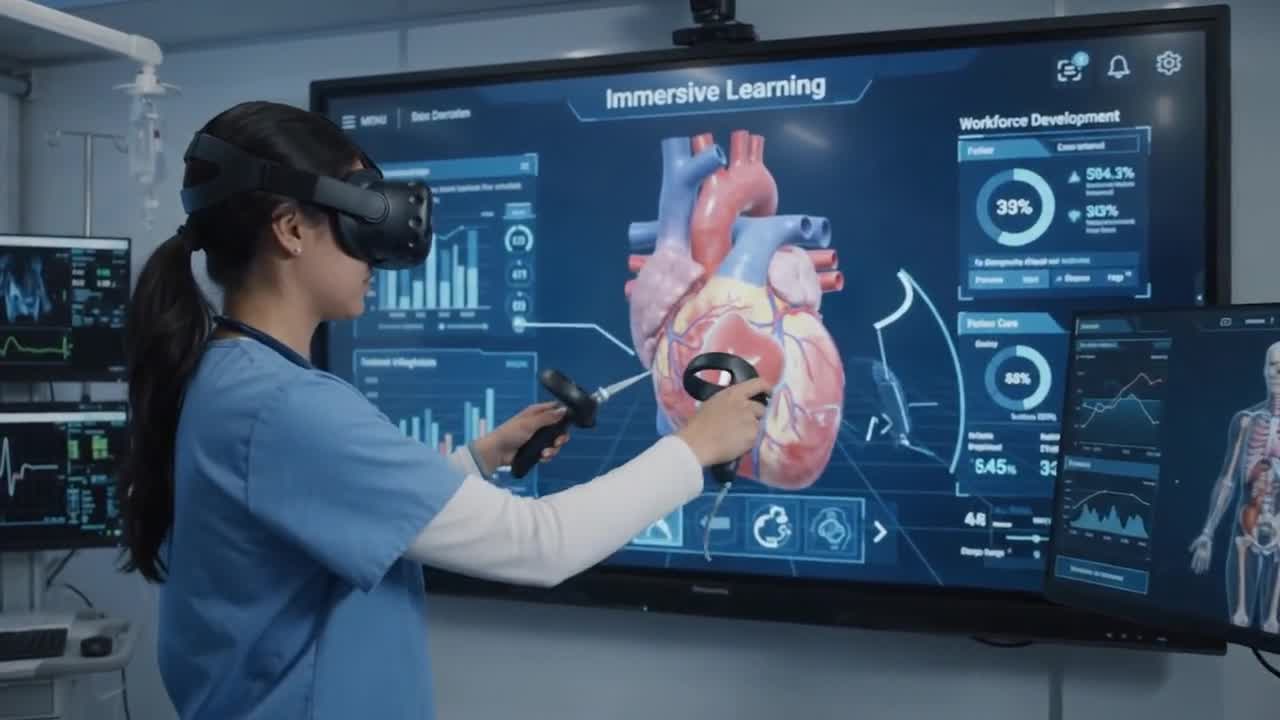
Lab 06 · Research
Learning inside VR.
AI-generated animation of a VR lesson. Scroll to play it.
Research questions
Five questions the study asks.
Measure it
Can computational thinking be measured well in this setting?
Does VR help
Does learning in VR improve these skills?
Compared to what
Are the gains different from learning without VR?
Grades
How do the gains relate to final grades?
What’s next
What can it teach future cybersecurity and manufacturing courses?
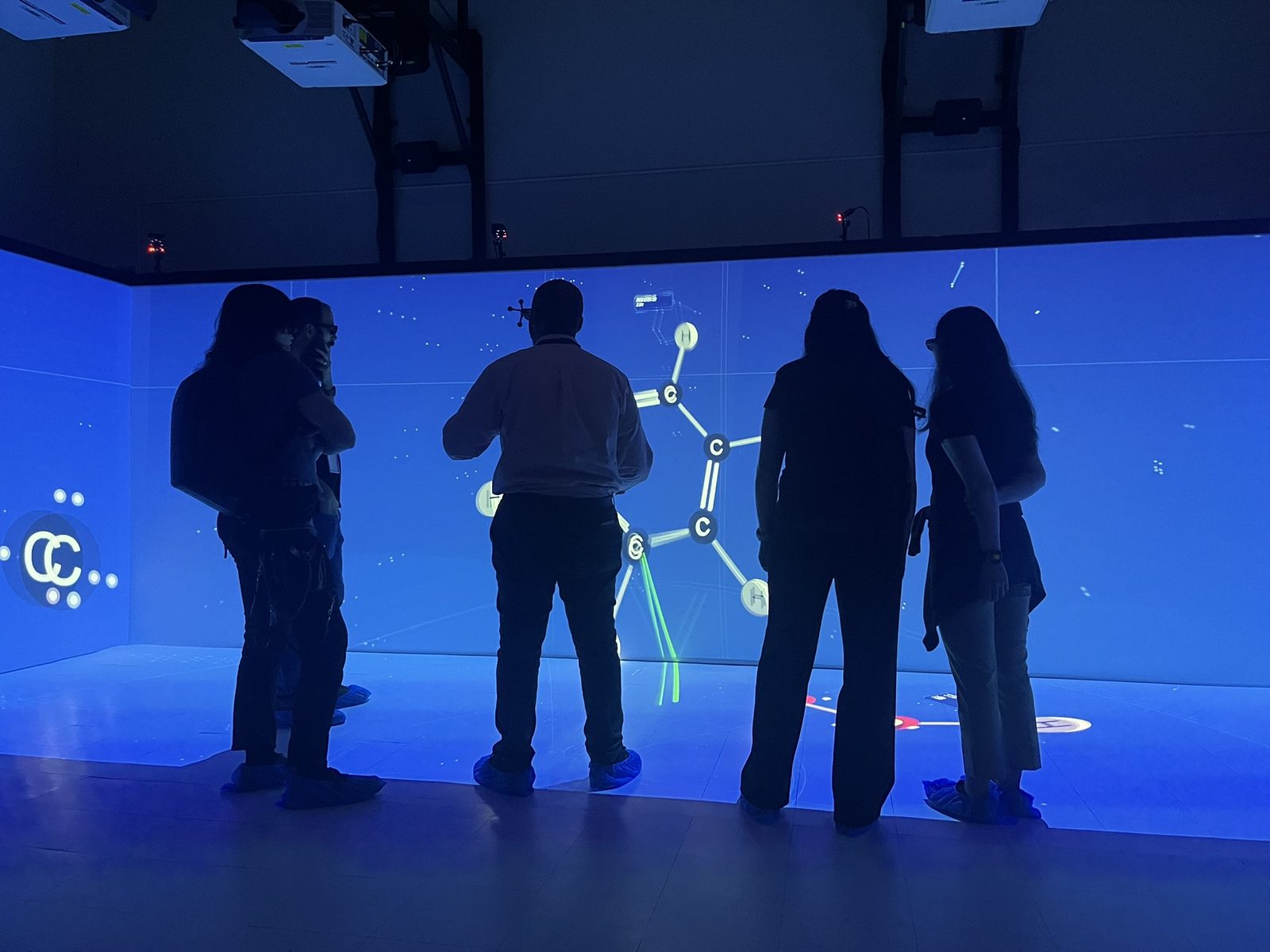
Five phases
Phase 1
Create a way to measure computational thinking in a VR setting.
Phase 2
Run the VR and non-VR groups side by side.
Phase 3
See how much each group improved.
Phase 4
Compare gains with final course grades.
Phase 5
Write up the methods, results and lessons for teaching.
How the study runs.
Where it stands
Heading into the final report.
The project is in its final reporting phase. The team has shown its research on posters at ASEE, the American Society for Engineering Education.
Deep dive
Go deeper.
The full story of this lab: what it is, why it matters, why Southern University is pursuing it and why it deserves funding.
More labs
See the other labs.
Request this service
Request this service.
Ask about research partnerships and studies of immersive learning.
- Research
- Studies
- Training