01
At a glance
What it is
Southern University's metal additive manufacturing lab, which builds solid metal parts from metal powder and metal wire using lasers and other heat sources.
Current focus
Being set up now, mainly for graduate research.
Machines shown in the lab videos
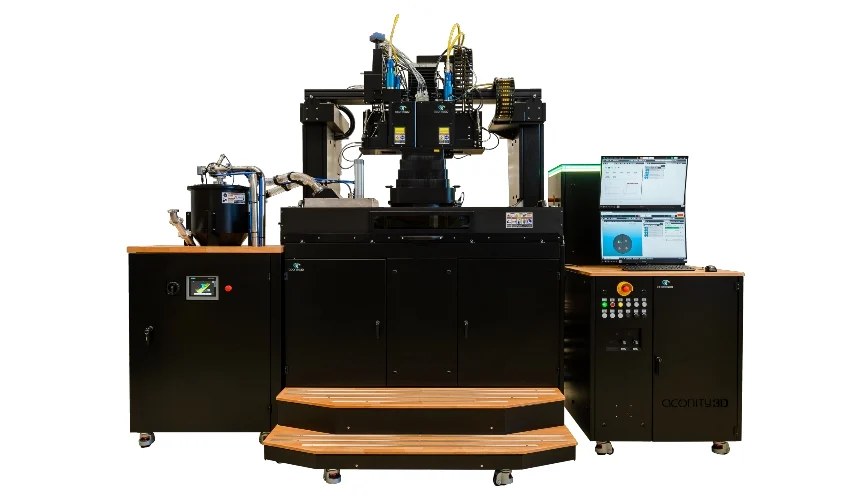
InssTek MX-Lab (powder-fed laser printer), Aconity3D (laser powder bed printer), EDMMax 434W (wire EDM), Mazak Quick Turn 20 (CNC lathe) and Hysitron TriboIndenter TI 900 series (nanomechanical tester).
Metals listed
Aluminum, Inconel 625 and Inconel 718.
Uses
Replacement parts, prototypes, special tools, small batches and research into parts that combine more than one metal.
National ties
Southern University is a Silver member of America Makes, the national additive manufacturing accelerator, and the first HBCU to join (2017).
02
What it is
The metal lab is where the pathway reaches its most advanced point. Everything a learner practices in a VR headset or the CAVE, from naming the parts of a printer to running a print job, leads toward machines like these. Here, a digital design becomes a solid metal part that can be measured, tested and, after the right qualification, used.
The lab works with metal in two forms. Metal powder is either blown into a laser beam or spread in thin layers and melted by a laser. Metal wire is used in other heat-source processes and in the wire EDM, which cuts rather than builds. In both cases, the part starts as a 3D model in the printer software and is built or shaped under computer control.
The lab is not only about printing. The five machines in the lab videos cover the full cycle a metal part goes through: two printers build it, a wire EDM and a CNC lathe cut and finish it, and a nanoindenter tests the material at a very small scale. That combination matters. A printed metal part almost always needs finishing and testing before anyone can trust it, and a lab that does all three steps teaches the whole job, not just one machine.
Today the lab is being set up mainly for graduate research. That makes it a research engine first: a place where Southern University faculty and graduate students study how printed metals behave, how processes can be controlled and how new combinations of metals perform. Over time, that same equipment and know-how anchors the advanced end of the training pathway described on the AM Lab site.
03
How it works
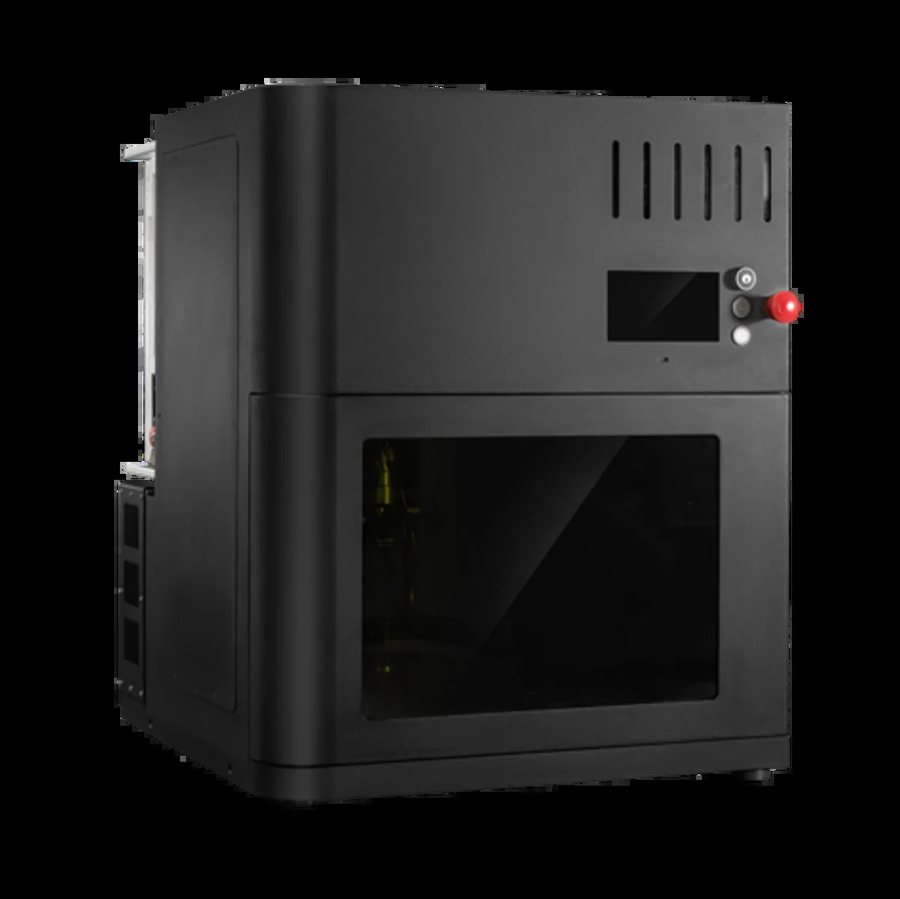
On the MX-Lab, metal powder is blown into a laser beam at the print head, and the melted metal builds the part one layer at a time. Its main parts are a powder feeder that holds and sends the powder, a deposition head where powder meets the laser, an optics module that shapes and aims the beam, a build module the part grows on, and a chiller that keeps the laser and machine cool. This family of processes, called directed energy deposition, is widely used to repair parts and add material to existing components, according to Loughborough University's additive manufacturing research group.
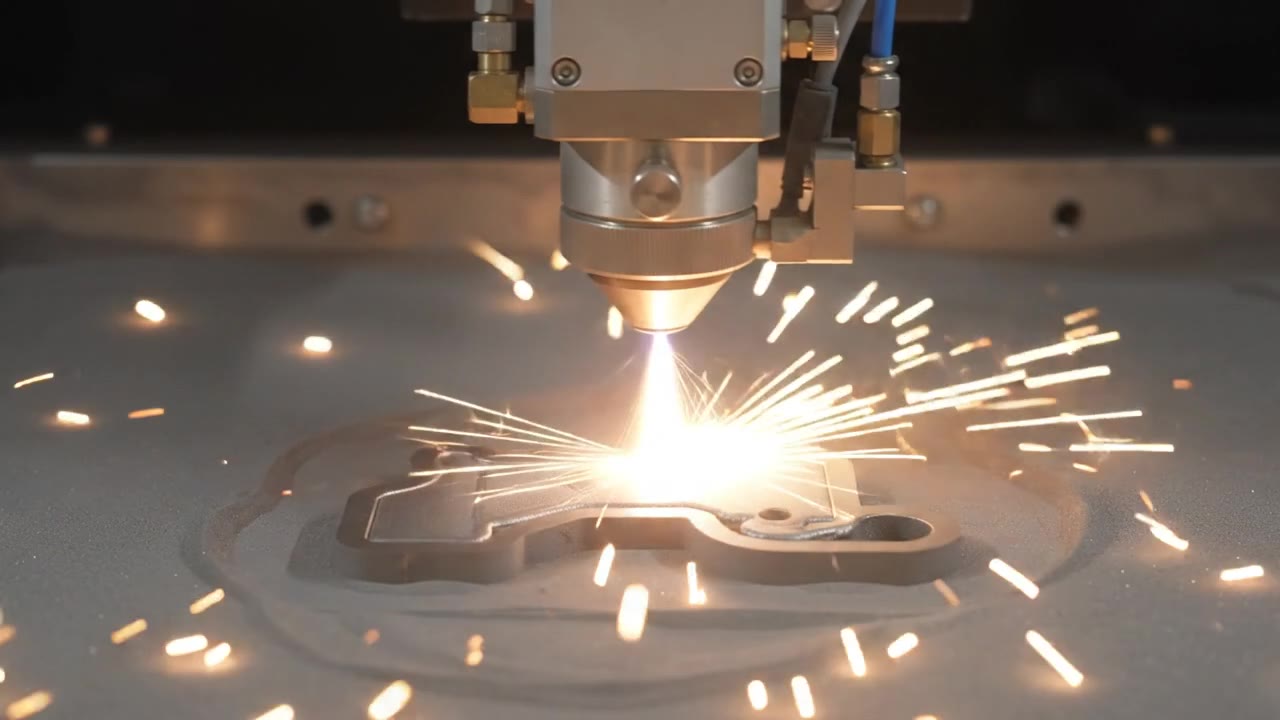
On the Aconity3D, a recoater blade spreads a thin layer of metal powder across a bed, and a laser melts the shape of the part into it. The next layer is spread on top, and the process repeats. Its scan head moves the laser fast and precisely, fiber cables carry the laser light, a linear drive system moves parts of the machine smoothly, and the operator runs the job from a control console. NASA research describes laser powder bed fusion of Inconel 718, one of the lab's listed metals, for parts exposed to high temperatures in rocket engines, aero-engines and gas turbines.
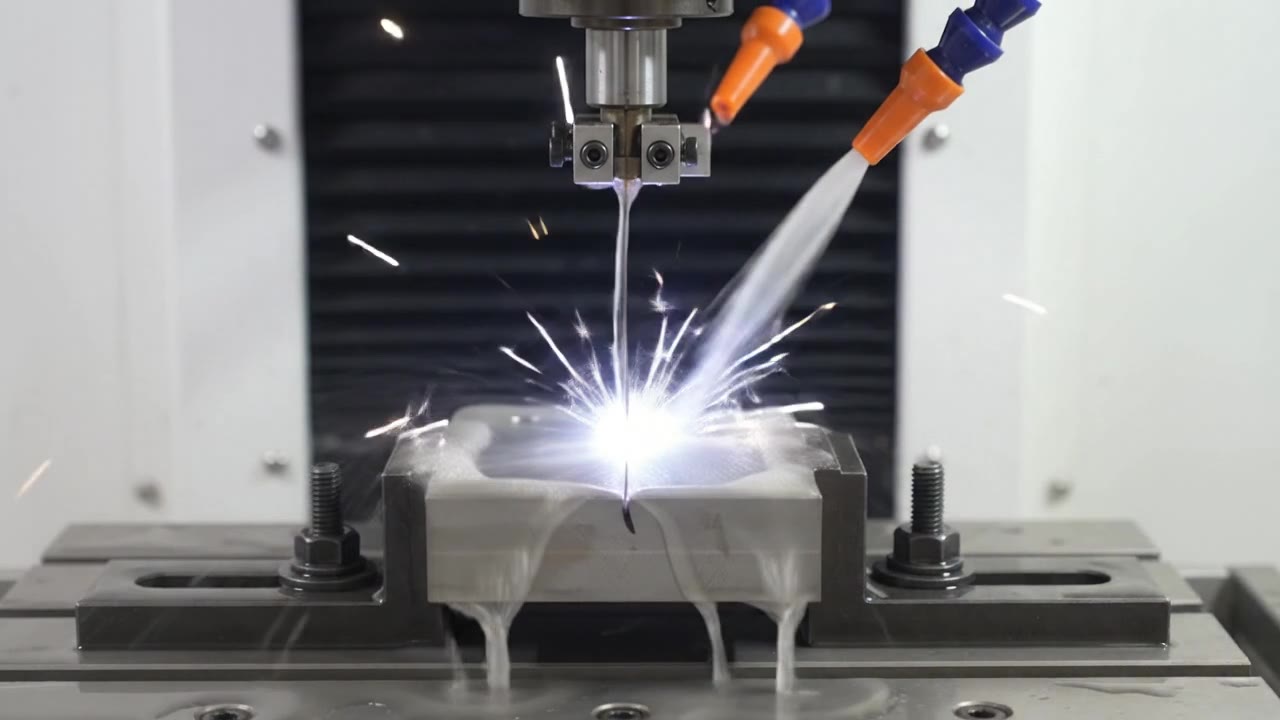
The EDMMax 434W is a wire EDM machine. A thin moving wire cuts through metal with electric sparks while coolant washes the cut and carries away tiny bits of metal. The wire never touches the part. Because the process depends on the metal conducting electricity rather than on its hardness, wire EDM cuts hardened tool steels, carbides, titanium alloys and superalloys, and it is used for dies, tooling and precise parts with narrow slots and sharp internal corners.
The Mazak QT-20 is a 2-axis CNC turning center made by Yamazaki Mazak. The metal spins in a hydraulic chuck while cutting tools on a turret shape it. The Mazatrol control lets the operator set up the cut on screen, step by step. A safety door closes the cutting area while it runs. In a metal printing lab, a lathe like this finishes printed parts to their final shape and surface.
The TriboIndenter, made by Hysitron (now part of Bruker), presses a tiny, precise tip into a material or drags it across the surface and measures the response. It runs nanoindentation, nanoscratch and nanowear tests and works out hardness and stiffness. An acoustic and environmental hood blocks heat changes, sound and vibration, and a granite base on an isolation platform keeps floor movement from shaking the test. Instruments in this family characterize hardness and elastic modulus in thin films, coatings and very small samples.
Put together, the workflow is: design the part, build it on one of the printers, finish it on the lathe or the EDM, then test the material. A replacement part, for example, is only useful if it is designed, tested and approved for its use, and this lab has the equipment to support every step of that chain.
04
Impact
Advanced manufacturing jobs need advanced training
Metal additive manufacturing sits at the high-skill end of manufacturing, where the workforce gap is widest. The Manufacturing Institute and Deloitte estimate that U.S. manufacturing could need as many as 3.8 million new employees between 2024 and 2033, with about 1.9 million of those jobs at risk of going unfilled without action on skills. People who can run, finish and test metal parts are part of that need.
Graduate researchers from an HBCU
The lab's current focus on graduate research matters for who enters the field's top tier. National Science Foundation data show that HBCUs have an outsized role in preparing students for science and engineering doctorates: 25% of people who earned an S&E doctorate between 2013 and 2017 had earned their bachelor's degree at an HBCU. A metal printing research lab at Southern University adds to that pipeline in a field where advanced degrees lead to design, research and leadership roles.
Louisiana's industrial base
Industrial plants run on metal parts and tooling. A December 2023 industry article reported a combined $154 billion in industrial projects in the pipeline across New Orleans, Baton Rouge and Lake Charles. Replacement parts, custom tools and small batches are exactly the kinds of work those operations need, and the people trained on this equipment can serve them.
A visible destination for younger learners
For a middle school student in a classroom VR lesson or a worker in the Mobile CAVE, this lab is the "where it leads" answer. The AM Lab site shows these machines opening up on screen so learners can see what real metal printing looks like long before they reach it.
Building what cannot be cast or cut
Additive manufacturing builds parts layer by layer, so it can make shapes and internal features that are difficult or impossible with casting or machining alone. That is why the lab lists prototypes, special tools and small batches among its uses: printing removes the need for molds or long setups when only a few parts are needed.
Repair and remanufacture
Directed energy deposition, the process behind the MX-Lab, is commonly used to repair worn components and add material to existing parts. Repair extends the life of expensive equipment and reduces the need to replace whole assemblies, which matters for any industry that keeps machinery running for decades.
High-performance alloys
The lab lists Inconel 625 for heat- and rust-resistant parts and Inconel 718 for aerospace and high-performance parts. NASA research notes that Inconel 718 is valued for corrosion resistance and strong mechanical properties at high temperatures, and that results for printed Inconel 718 differ across machines because of process parameters, feedstock and machine configuration. Understanding those differences is exactly the kind of graduate research a lab like this supports.
Multi-material research
The lab lists research into parts that combine more than one metal. Printing lets engineers place different materials in different parts of a single component, which is one of the directions the field is moving.
Measurement as part of manufacturing
The TriboIndenter brings materials testing into the same lab as production. Printed metals can have different properties from cast or wrought metals, and measuring hardness and stiffness at small scales helps researchers understand and control what the printers make.
05
Why Southern University
A national additive manufacturing partnership
Southern University became a Silver member of America Makes in 2017, the first HBCU to partner with the national accelerator. America Makes is a public-private collaboration led by federal agencies including the Departments of Commerce, Energy and Defense, NASA and the National Science Foundation, and it has produced an educational roadmap of the skills the additive manufacturing workforce needs. The university committed to building those skills into its curricula.
Research that connects printing, VR and security
Southern University's NSF-funded project, "Enhancing Additive Manufacturing Education with Cybersecurity and Virtual Reality" (award DUE 1915520, $1.65 million, 2019), studies how attacks on digital 3D printer files can change printed parts, and uses VR to teach it. Its targeted mechanical engineering courses and its partnership with Penn State's CIMP-3D center tie the metal lab to a wider research program.
A pathway that already has its entry points
The metal lab does not stand alone. The AM Lab VR modules, the polymer labs and the Mobile CAVE all lead toward it. Few institutions can show a complete route from a K–12 VR lesson to a graduate metal printing lab on the same campus.
06
Who it serves
Graduate students and faculty researchers
The primary users today: people studying printed metals, process control, multi-material parts and materials testing.
Undergraduate engineering students
As the lab matures, students in mechanical engineering and related courses gain exposure to industrial-grade metal printing, finishing and testing.
Industry partners
Plants and shops that need prototypes, special tooling, small batches or research on replacement parts, and that want to connect with graduates who know the equipment.
Learners on the AM Lab pathway
Workers and students who start with VR modules see this lab as the advanced destination of the track.
07
Why fund it now
The lab is being set up now. Support at this stage shapes how quickly it moves from installation to productive research and training: operator training, materials, maintenance, safety systems and research staff time are what turn machines into results.
Funding makes the lab teachable. The AM Lab site already shows each machine opening up on screen. Support for VR models of these specific machines would let learners practice their parts and workflows virtually before working on them, the same approach the AM Lab uses for desktop printers.
Funding connects it to employers. Replacement parts, special tools and small batches are services Louisiana industry uses. Partnerships that bring real industry problems into the lab give students relevant projects and give companies access to the equipment and the people trained on it.
Funding protects a national advantage. Southern University already holds an America Makes membership and NSF-funded research in additive manufacturing education. Investment now builds on that position rather than starting over.
08
How it connects
The metal lab is the advanced end of the AM Lab pathway. Learners start with the VR printer modules built in the XR Development Studio, practice in the Stationary CAVE or the Mobile CAVE, and print plastic parts in the Polymer 3D printing lab before reaching metal. On the road, the Mobile CAVE sub-project Manufacturing technologies and cyber-additive XR carries the same manufacturing training to plants and schools. The Vision document explains how all of these fit into one pathway.
09
Questions funders ask
It is being set up now, mainly for graduate research. The lab videos show all five machines in place.
Printed metal parts usually need finishing and testing before they can be trusted. The lathe and the EDM shape and finish parts, and the nanoindenter measures how hard and stiff the material is. Together they cover the whole cycle.
The lab lists replacement parts, prototypes, special tools and small batches among its uses. A part made for real use has to be designed, tested and approved for that use, and the lab has the equipment for each step.
The AM Lab VR modules teach printer parts and print jobs first. This lab is where advanced learners and researchers work with real metal printing equipment after that preparation.
It sits at the end of a complete pathway that starts in K–12 classrooms and the Mobile CAVE, and it is linked to NSF-funded research on cybersecurity and VR in additive manufacturing at an HBCU.
Getting the lab fully operational for research and training: operator and safety training, materials, maintenance, research staff, and VR models of these machines for virtual practice.
10
Sources
- Southern University Is the First HBCU to Partner With America Makes (Journal of Blacks in Higher Education, 2017)
- Southern University newsroom: America Makes Silver membership (2017)
- Southern receives $1.65M NSF grant to study cybersecurity for 3D printing (Southern University, 2019)
- Southern University CSAM project page (NSF award 1915520)
- Directed Energy Deposition (Loughborough University Additive Manufacturing Research Group)
- NASA Technical Reports Server: L-PBF Inconel 718 build-to-build study
- Wire EDM Machining (Xometry)
- Bruker Hysitron TI-900 Nanoindenter (Georgia Tech Materials Characterization Facility)
- Manufacturers Need as Many as 3.8 Million New Employees by 2033 (The Manufacturing Institute, 2024)
- Skilled workers needed for Louisiana's industrial construction boom (BIC Magazine, December 13, 2023)
- NSF NCSES: field of degree, minorities (HBCU role in S&E doctorates)