01
At a glance
What it is
Southern University's polymer labs, which turn designs into plastic parts and fast prototypes and test the materials they are made from.
Two campus labs
the Additive Manufacturing / Entergy 3D Design Lab (Room 118) for 3D design and printing, and the Polymer Processing and Characterization Lab (Room 448) for making and testing polymer materials.
Listed equipment
an SLA 250 resin printer, a DMA Q800 dynamic mechanical analyzer, a Nanotrac 150 particle size analyzer, a Sonic VC-750 ultrasonic mixer, a Hitachi S-2460N scanning electron microscope, a Cordin 550 high-speed imaging system and a Yokogawa DC-100 data acquisition system.
Uses
rapid prototyping, teaching models, product design, working plastic parts and prototype testing.
Pathway role
the closest real-world match to the AM Lab VR printer modules, and the place where learners print for real.
Source
lab names, rooms and equipment come from Southern University's published facilities listings.
02
What it is
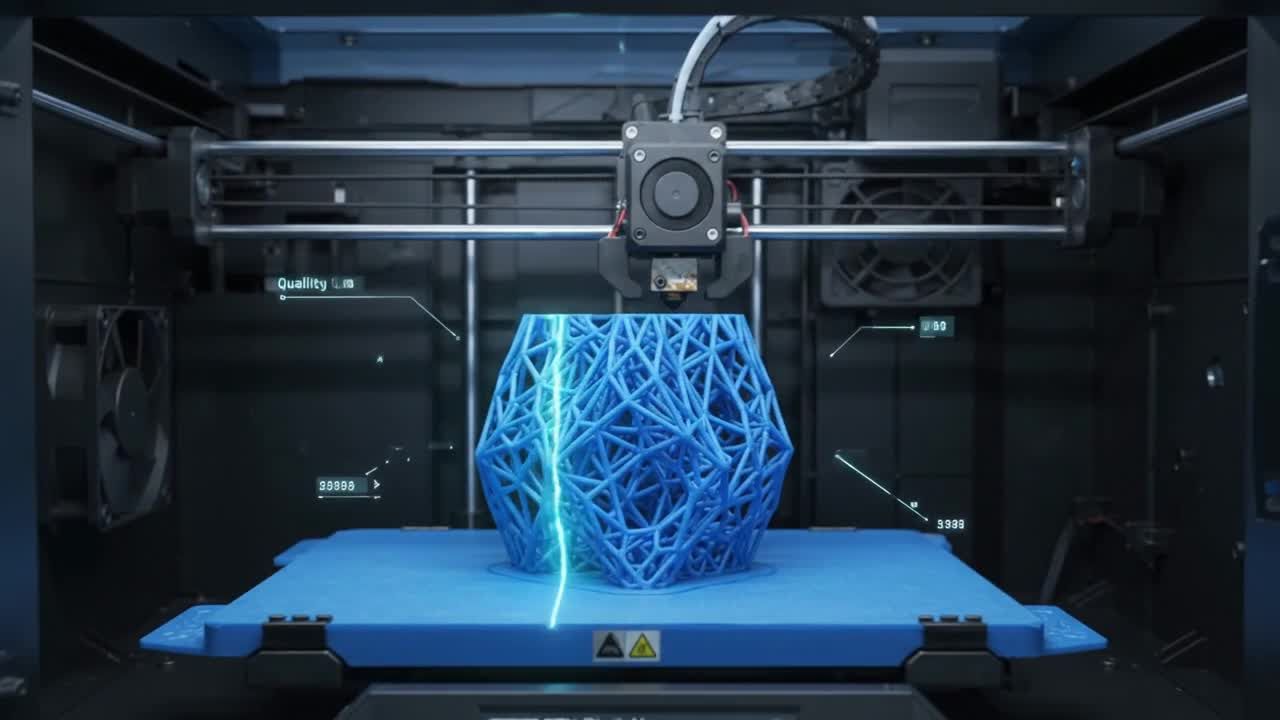
Polymer printing builds parts from plastic. It is the fastest way to turn an idea into something a person can hold, test and improve. For most learners on the pathway, this is the first real 3D printing they do: after practicing printer parts and print jobs in a VR headset or the CAVE, they come here to run the real thing.
Southern University has two campus labs that work with polymers. The Additive Manufacturing / Entergy 3D Design Lab in Room 118 focuses on 3D design and printing: turning a design file into a part. The Polymer Processing and Characterization Lab in Room 448 focuses on making and testing polymer materials: understanding what the plastic itself is made of and how it behaves. Together they cover both sides of the work, the part and the material.
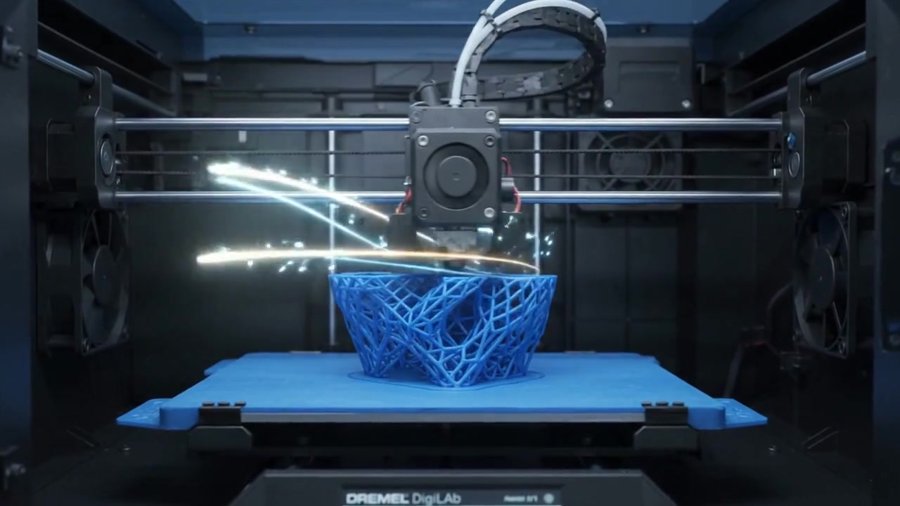
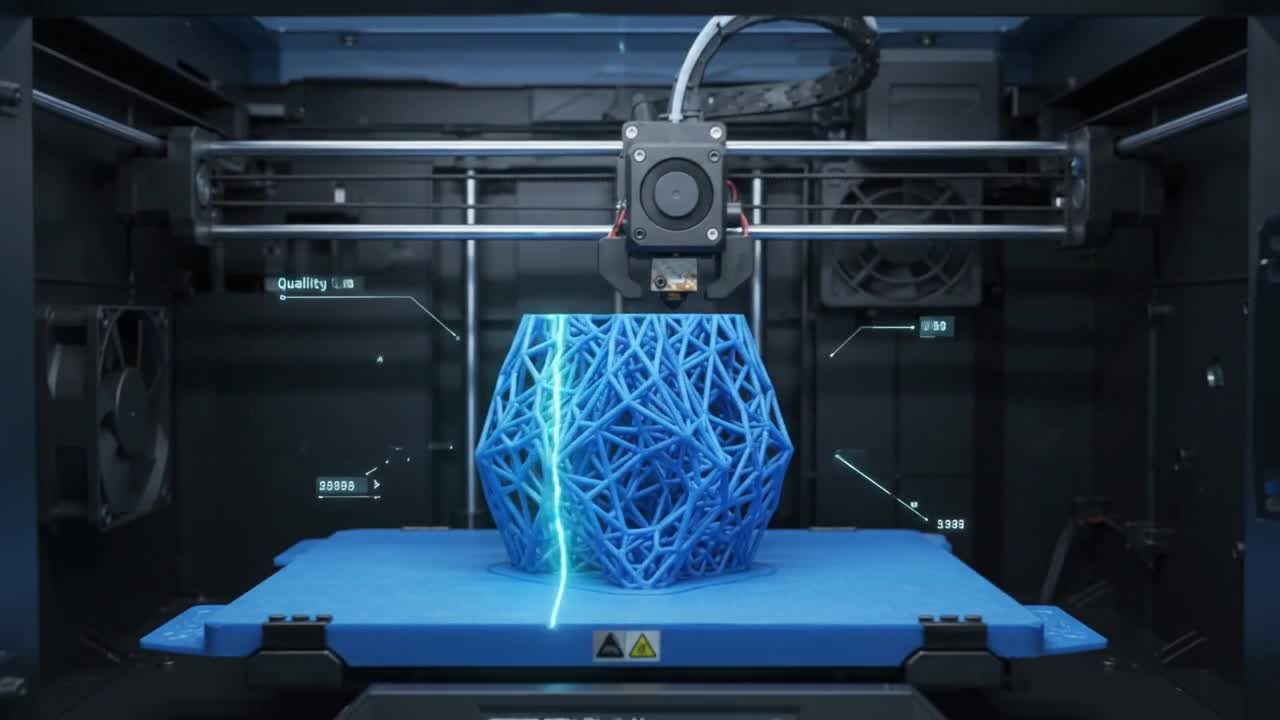
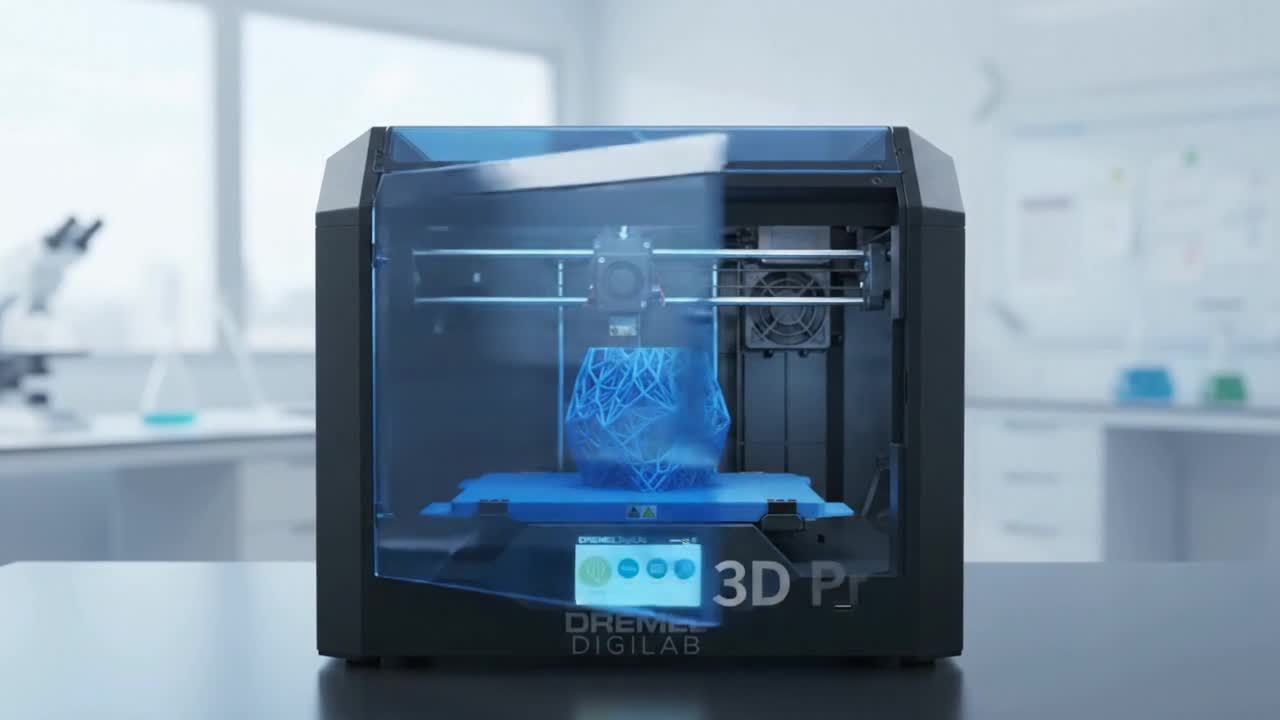
The equipment list reflects that range. A resin printer builds detailed parts from liquid resin. A dynamic mechanical analyzer tests how a material responds to force and heat. A particle size analyzer measures particle sizes, and an ultrasonic mixer prepares nanocomposite mixtures for new materials. A scanning electron microscope shows a material's fine structure, a high-speed imaging system captures very fast events, and a data acquisition system records the measurements. That is a research-grade materials lab, not only a print shop.
For the pathway, the polymer labs do two jobs. They give learners a safe, affordable place to print real parts, and they give researchers the tools to study and improve the materials those parts are made from.
03
How it works
The AM Lab maps its training modules directly to this work. Module 2 (Printer Components) teaches learners to identify printer parts and their functions before they run a printer, using an interactive VR model. On campus, that knowledge transfers straight to the machines in the design lab.
Module 5 (Print Preparation) covers file preparation, materials and printer settings. A design starts as a 3D model, is sliced into layers and is matched to the right material and settings. Getting this step right is what separates a clean print from a failed one.
Module 6 (Print Job Operations) has learners practice the full workflow of a print in a VR simulation, from preparation to completion. In the polymer lab, they start a real print and watch it build layer by layer.
Module 7 (Quality Control and Troubleshooting) teaches learners to find defects and their likely causes. In this lab, checking a part can go beyond looking at it: the characterization equipment can measure how the material behaves under force and heat and show its structure under a microscope.
Module 8 (Applied Manufacturing Project) is the capstone: learners design, print, inspect and present a part with an instructor. It runs at a print station that travels with the Mobile CAVE, at a partner site, or in labs like these.
In the Polymer Processing and Characterization Lab, researchers go further. They prepare new mixtures, measure particle sizes and test how polymers respond to force and temperature. Dynamic mechanical analysis, for example, measures a material's stiffness and how much energy it absorbs as temperature changes, which shows where a plastic turns from rigid to soft and helps predict whether a part will stay stiff enough in use.
04
Impact
An affordable first step into manufacturing
Plastic printing is the most accessible kind of additive manufacturing. Materials cost less than metal, the machines are safer to learn on, and mistakes are cheap. That makes polymer printing the right place for beginners, including students and workers who have never been in a manufacturing setting, to get their first real success.
Skills that transfer to many jobs
Rapid prototyping, product design and quality checking are not limited to one industry. The same skills apply in manufacturing, product development, engineering and design. The AM Lab's 40-hour introduction includes 16 hours of supervised equipment time and 4 hours of assessment and career planning, and every skill is checked and recorded on its own, which gives learners specific evidence of what they can do.
Part of a large regional need
U.S. manufacturing could need as many as 3.8 million new employees between 2024 and 2033, according to the Manufacturing Institute and Deloitte, with about 1.9 million jobs at risk of going unfilled. Entry points that are affordable and quick to start, like polymer printing, are how more people get into that pipeline.
Seeing and handling ideas
Printed teaching models help students see and handle an idea that is hard to picture from a drawing. For teachers and young students reached through the classroom VR program, a printed object is often the moment an abstract concept becomes real.
Faster design cycles
Printing a first version of a product quickly and cheaply lets designers try several versions before choosing one. Each print can be checked for fit, strength and function, then improved and printed again. That loop is how modern product development works, and learners who practice it are ready for design and engineering teams.
Materials science behind the print
The characterization equipment connects printing to materials research. Dynamic mechanical analysis reveals a polymer's glass transition temperature, the point where it shifts from rigid toward rubbery behavior, along with its stiffness and damping. Those properties predict a part's usable temperature range, toughness and flexibility. A lab that can measure them can design better materials, not only use existing ones.
Nanocomposites and new materials
The ultrasonic mixer and particle size analyzer support work on nanocomposites, materials where very small particles are mixed into a polymer to change its properties. That kind of research is how new printable materials with better strength or other properties are developed.
Seeing fast events and fine structure
The scanning electron microscope and the high-speed imaging system let researchers see what the eye cannot: the fine structure of a material and events that happen too fast to watch. Both support research on how printed and processed polymers behave and fail.
The digital file is part of the part
Southern University's NSF-funded work on cybersecurity in additive manufacturing shows that attacks on a 3D printer file can change a printed part in ways that are hard to detect without checking every layer. Learners who understand printing, inspection and material testing together are better prepared to catch those problems.
05
Why Southern University
Real labs already in place
The polymer labs are not a plan. They are listed in Southern University's published facilities documents, with rooms and equipment named. The AM Lab pathway builds on infrastructure the university already runs.
A tradition in additive manufacturing education
Southern University became the first HBCU to partner with America Makes in 2017, connecting its curriculum to a national roadmap of additive manufacturing skills. Its NSF-funded project on additive manufacturing education with cybersecurity and virtual reality (award DUE 1915520) targets engineering courses from first year through senior level.
A bridge between virtual and physical
Because the AM Lab VR modules were built to match this kind of printing, the polymer labs are the natural place where virtual practice meets real equipment. Southern University's own research reports that students in its CAVE course also had access to the institution's 3D printing lab, linking the two experiences in practice.
06
Who it serves
Engineering and science students
Students in engineering, chemistry and materials courses who design, print and test parts, and who study polymer materials.
AM Lab learners
Workers and students on the AM Lab track who move from VR modules to real printing and their capstone project.
Researchers
Faculty and graduate students developing and testing polymer materials, nanocomposites and printed parts.
Teachers and K–12 partners
Teachers who use printed models to make abstract ideas concrete, and schools that connect to the pathway through the classroom VR program and Mobile CAVE visits.
Local businesses and makers
Product designers and small companies that need fast prototypes, fixtures, housings and brackets, and want to connect with students trained to make them.
07
Why fund it now
The pathway's success depends on this step. Learners who finish the VR modules need real printers to practice on, and the polymer labs are where that happens on campus. Support for printers, materials and supervised lab time is what turns virtual preparation into a real skill.
Funding grows capacity. More printers, more material and more instructor time let more learners complete Module 8, the applied project that proves they can design, print, inspect and present a part.
Funding supports the traveling print station. The AM Lab plans Module 8 at a print station that travels with the Mobile CAVE. Equipment and staff from the polymer side of the work are what let printing happen at a plant, school or partner site.
Funding strengthens research. The characterization equipment supports materials research that leads to publications, grants and new materials. Investment in maintenance, consumables and research staff keeps that capability active.
08
How it connects
The polymer labs are the hands-on core of the AM Lab track: the VR modules built in the XR Development Studio teach the printer, and this is where learners print for real. They are the step before the Metal 3D printing lab, which handles metal parts and graduate research. On the road, the Mobile CAVE sub-project Manufacturing technologies and cyber-additive XR brings the same printing curriculum to plants and schools, and K–12 education and mobile STEAM outreach introduces younger students to it. The Vision document shows where this lab sits in the full pathway.
09
Questions funders ask
The Entergy 3D Design Lab in Room 118 focuses on 3D design and printing. The Polymer Processing and Characterization Lab in Room 448 focuses on making and testing polymer materials.
Plastic printing is more affordable, safer to learn on and faster to iterate. It teaches the same core workflow, design, prepare, print and check, before learners move to metal.
The AM Lab VR modules teach printer parts and print jobs. Learners then run real printers here and complete a supervised capstone project.
Both. The design lab supports printing and prototyping, and the characterization lab holds research-grade equipment for studying polymer materials.
The labs support product design and prototype testing, and the AM Lab pathway connects to employers and partner sites. Arrangements are made through the university.
More printers and materials, supervised lab time for more learners, the traveling print station for Mobile CAVE visits, and upkeep and staff for the characterization equipment.
10
Sources
- Southern University Is the First HBCU to Partner With America Makes (Journal of Blacks in Higher Education, 2017)
- Southern University CSAM project page (NSF award 1915520)
- Southern receives $1.65M NSF grant to study cybersecurity for 3D printing (Southern University, 2019)
- Introduction to Dynamic Mechanical Analysis and its Application to Testing of Polymer Solids (TA Instruments)
- Immersive Engineering Learning and Workforce Development in a CAVE (ASEE 2024)
- Manufacturers Need as Many as 3.8 Million New Employees by 2033 (The Manufacturing Institute, 2024)